


 English
 Français
News
Home / News / Industry News / TIG Welding Gloves: The Ultimate Guide to Precision, Comfort, and Safety

TIG welding demands more from your hands than any other welding process. Unlike MIG or stick welding, TIG requires direct finger control of the torch, precise arc manipulation, and simultaneous feeding of filler rod — all while managing intense heat. The right TIG welding gloves must balance thin, tactile dexterity with sufficient heat and UV protection. Thick, bulky gloves designed for stick welding will make TIG work frustratingly imprecise. This guide breaks down everything you need to choose, use, and maintain TIG gloves effectively.
Content
TIG welding (Gas Tungsten Arc Welding) generates arc temperatures exceeding 11,000°F (6,093°C), but the welder's hands are typically positioned further from the arc than in other processes. The greater challenge is not peak heat, but sustained low-level heat exposure combined with the need for fine motor control.
Standard MIG or stick gloves are constructed with thick cowhide or heavy-duty leather and insulation layers that can reach 3–5mm in thickness. While protective, this bulk eliminates the tactile sensitivity needed to guide a TIG torch within a 1–3mm arc gap. TIG gloves, by contrast, are typically constructed at 1–2mm leather thickness, prioritizing touch and grip over maximum thermal insulation.
Key differences include:
The material of a TIG glove determines its heat tolerance, flexibility, and longevity. Each leather type has distinct trade-offs.
Goatskin is considered the gold standard for TIG welding gloves. Its naturally tight grain structure provides excellent resistance to heat and abrasion while remaining supple and thin. Goatskin gloves typically maintain flexibility even after repeated heat exposure, making them the preferred choice for professional welders working on stainless steel, aluminum, and exotic alloys.
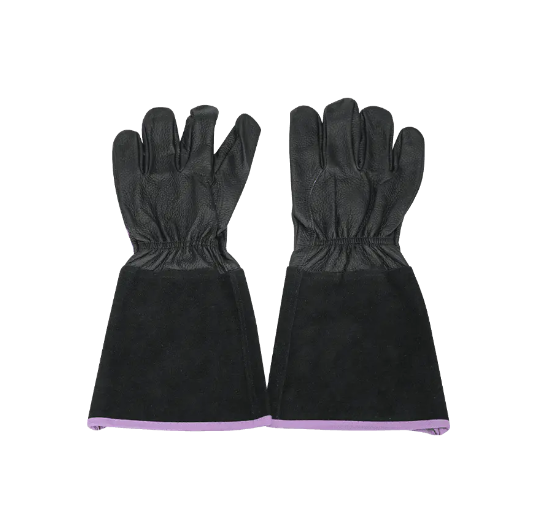
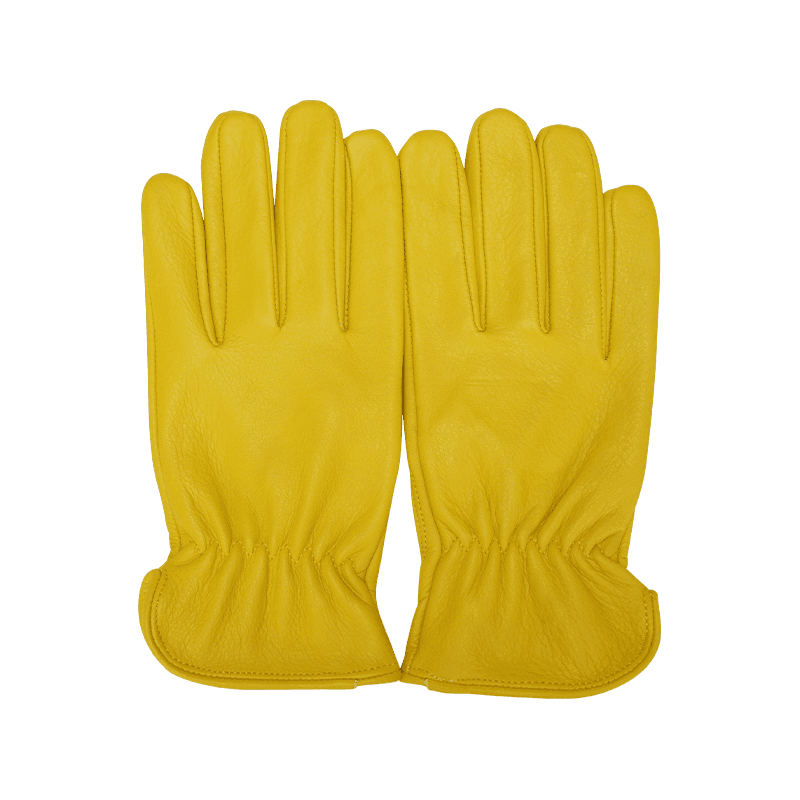
Deerskin offers exceptional softness and a glove-like fit right out of the package. It conforms to hand shape quickly and provides outstanding tactile sensitivity. However, deerskin is less abrasion-resistant than goatskin and may wear through faster in high-use applications. It performs best for intermittent or precision work rather than all-day production welding.
Pigskin is more durable and abrasion-resistant than deerskin, but slightly stiffer. It is a common material in mid-range TIG gloves and performs well for general fabrication work. Pigskin gloves benefit from a break-in period of several hours of use before reaching optimal pliability.
Cowhide is the most common leather in welding gloves overall, but it is less ideal for TIG. Its thickness and stiffness provide superior protection for MIG and stick welding but sacrifice the dexterity required for TIG torch control. Split cowhide (the inner layer of the hide) is softer and sometimes used in economy TIG gloves, though it offers lower heat resistance than full-grain alternatives.
| Material | Dexterity | Heat Resistance | Durability | Best Use Case |
|---|---|---|---|---|
| Goatskin | Excellent | High | High | Professional / all-day TIG |
| Deerskin | Outstanding | Moderate | Moderate | Precision / light-duty TIG |
| Pigskin | Good | Moderate–High | High | General fabrication TIG |
| Cowhide | Limited | High | Very High | Not recommended for TIG |
When selecting TIG welding gloves for professional or industrial use, understanding the relevant safety certifications ensures the gloves meet minimum performance requirements.
EN 12477 is the European standard for protective gloves for welders, with two performance categories:
In the United States, OSHA references ANSI/ISEA 105 for hand protection selection, which covers cut resistance, heat resistance, and flame resistance ratings. For welding specifically, OSHA 29 CFR 1910.138 requires appropriate hand protection be selected based on the hazards present.
Always verify that TIG gloves carry visible certification markings. Uncertified gloves may lack consistent quality control, particularly in seam construction and leather grade.
Fit is arguably the most critical factor in TIG glove performance. A glove that is too large will bunch at the fingertips and reduce torch control accuracy. A glove that is too small will restrict circulation, fatigue the hand faster, and stress the leather at the seams.
To size TIG gloves correctly:
Standard sizing typically ranges from Small (7–7.5 inches circumference) to Extra Large (9.5–10 inches). Many professional welders find that sizing down half a size from their standard glove size gives a better TIG-specific fit, as leather will stretch slightly with heat and use.
TIG gloves are available with short cuffs (4–6 inches) and long gauntlet cuffs (14–16 inches). For overhead or out-of-position TIG welding, a longer cuff is essential to prevent UV radiation burns to the forearm. For bench welding in a fixed position, a shorter cuff may offer greater arm mobility. Most professional TIG welders prefer a 14-inch cuff as a versatile default.
Beyond material choice, specific construction details determine how well a TIG glove performs under real working conditions.
Seams located on the palm side of the fingers will cause irritation and reduce tactile feedback. High-quality TIG gloves use back-seam or outside-seam construction so no stitching contacts the fingertip or palm during use. Stitching thread should be Kevlar or similar aramid fiber, which resists degradation at temperatures up to 800°F (427°C). Standard polyester thread will melt and fail at welding temperatures.
TIG gloves are available in three lining configurations:
The thumb and index finger experience the most wear in TIG welding due to torch grip and filler rod feeding. Gloves with double-layered leather patches in these areas can extend service life by 40–60% compared to single-layer construction, without significantly compromising dexterity if the patch material matches the primary leather.
Different TIG welding applications impose different demands on gloves. Selecting gloves matched to the specific task improves both safety and output quality.
Aluminum TIG uses AC (alternating current) welding, which produces more radiant heat and UV output than DC welding. Gloves used for aluminum TIG should have UV-resistant leather and at minimum a cotton lining. The arc cleaning action of AC welding also produces more spatter than DC, so abrasion resistance at the fingertips is more important.
DC TIG on stainless and carbon steel produces less radiant heat but requires sustained fine arc control, often for extended periods. Unlined or lightly lined goatskin gloves are the standard choice. The priority here is sustained comfort over several hours without hand fatigue.
Pipe welding frequently requires out-of-position welding — overhead, vertical, and horizontal — where molten metal and spatter may fall toward the hands and wrists. In these applications, a 16-inch gauntlet cuff with FR lining becomes essential, not merely convenient. Pigskin or reinforced goatskin provides the durability needed for production pipe work.
Welding thin sheet metal (under 1/8 inch) demands the most precise torch positioning of any TIG application. Some professionals working on very thin gauge work (0.030–0.060 inch) choose to weld with a single thin leather glove on the torch hand and a standard glove on the filler rod hand, accepting slightly increased heat exposure to maximize control. This is a professional technique and not recommended for those still developing TIG skills.
Even with high-quality gloves, improper use and maintenance habits significantly reduce protection and lifespan.
Proper care significantly extends glove service life. A well-maintained pair of quality TIG gloves can last 6–18 months in regular professional use; neglected gloves may fail within weeks.
Wipe down gloves after each use with a dry cloth to remove metal dust, spatter residue, and oils. For heavier contamination, use a slightly damp cloth with mild soap and allow to dry completely before storing. Never machine wash or soak leather welding gloves.
Apply a leather conditioner specifically formulated for work gloves every 4–6 weeks under regular use. Avoid petroleum-based products, which can degrade leather fibers over time. Neatsfoot oil or beeswax-based conditioners are widely used in the welding industry. Apply sparingly — over-conditioning can soften the leather excessively and reduce thermal protection.
Before each welding session, inspect gloves for:
Any glove showing structural compromise should be replaced immediately. The cost of a new pair of TIG gloves is insignificant compared to the medical and productivity costs of a hand burn.
Some highly experienced TIG welders working on extremely fine or critical-tolerance welds use individual leather fingertip covers rather than full gloves. These cover only the thumb, index, and middle fingers — the primary torch contact points — leaving the rest of the hand exposed for maximum tactile feedback.
This approach is only appropriate under specific conditions:
For the vast majority of TIG welding tasks, full TIG gloves remain the correct and safer choice, even if they require a brief adjustment period to adapt to compared to bare-hand control.
Knowing when to retire TIG gloves is as important as selecting the right pair. There is no fixed replacement interval — service life depends on frequency of use, materials welded, and maintenance quality. Replace gloves when any of the following conditions are present:
If you are interested in our products, please consult us
 +86-0513-68163373