


 English
 Français
How to choose Safety Gloves?
To choose the right safety gloves, start by identifying the specific hazard — mechanical, chemical, thermal, electrical, or biological — then match the glove material, thickness, and certification rating to that hazard. There is no universal safety glove: a glove that excels against cuts may offer zero chemical resistance, and a chemically resistant glove may provide no grip or thermal protection. Choosing incorrectly can be as dangerous as wearing no gloves at all, since it creates a false sense of security.
Content
- 1 Step One: Identify the Hazard Type
- 2 Understanding Cut Resistance Levels
- 3 Choosing Glove Material for Chemical Protection
- 4 Thermal Protection: Heat and Cold Applications
- 5 Electrical Safety Gloves: Voltage Classes Explained
- 6 Fit, Dexterity, and Ergonomics
- 7 Disposable vs. Reusable Gloves: When to Use Each
- 8 Common Mistakes to Avoid When Selecting Safety Gloves
Step One: Identify the Hazard Type
Every glove selection decision begins with a formal or informal hazard assessment. The main hazard categories that safety gloves address are:
- Mechanical hazards — cuts, abrasions, punctures, and impact from tools, sheet metal, glass, or machinery.
- Chemical hazards — skin contact with acids, bases, solvents, oils, or biological fluids.
- Thermal hazards — heat, flame, molten metal splatter, or conversely, extreme cold and cryogenic materials.
- Electrical hazards — contact with live conductors or arc flash exposure.
- Biological hazards — bloodborne pathogens, infectious materials, or contamination in medical and laboratory settings.
- Vibration hazards — prolonged use of power tools causing hand-arm vibration syndrome (HAVS).
Many jobs involve multiple hazard types simultaneously. In these cases, the glove must address the dominant or highest-consequence hazard first, then be evaluated for secondary hazard performance.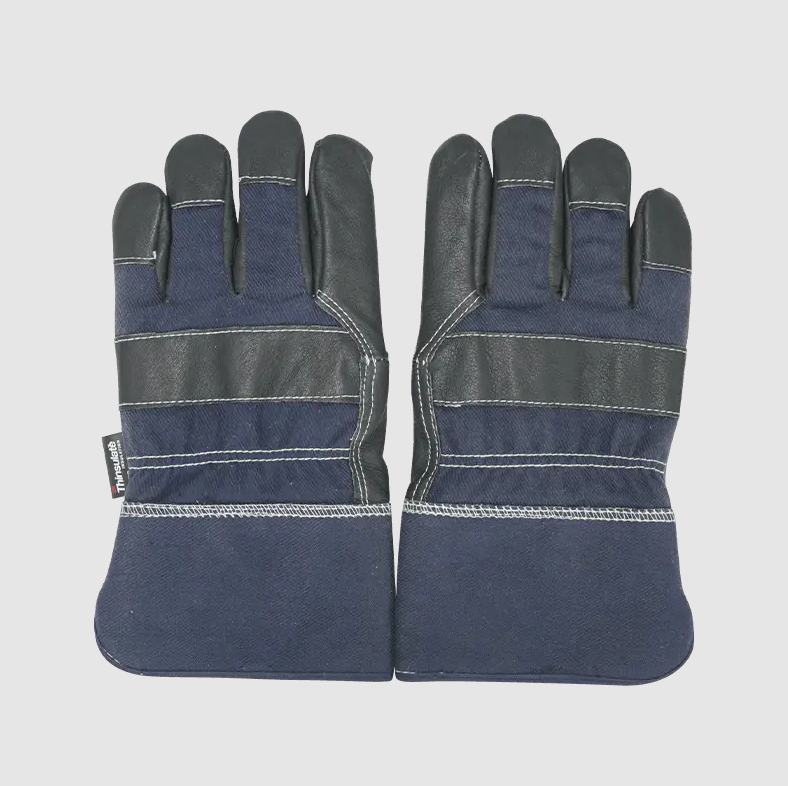
Understanding Cut Resistance Levels
Cut resistance is the most commonly misunderstood glove rating. Two international standards dominate the industry: EN 388 (Europe) and ANSI/ISEA 105 (North America). They use different test methods and rating scales, so a glove rated under one standard cannot be directly compared to a glove rated under the other.
| Standard | Cut Level Scale | Test Method | Typical Use Case |
|---|---|---|---|
| EN 388 | A–F (lowest to highest) | TDM-100 blade test | European industrial workplaces |
| ANSI/ISEA 105 | A1–A9 (lowest to highest) | ASTM F2992 (TDM-100) | North American industrial workplaces |
As a practical guide: ANSI A4–A6 or EN 388 Level C–D covers most general manufacturing and construction applications. Glass handling and metal stamping typically require ANSI A7–A9 or EN 388 Level E–F.
Choosing Glove Material for Chemical Protection
Chemical-resistant gloves must be matched to the specific chemical in use. No single glove material resists all chemicals, and cross-referencing a glove manufacturer's chemical compatibility chart is mandatory before use. Below is a general guide to common materials:
| Glove Material | Strong Against | Weak Against | Typical Thickness |
|---|---|---|---|
| Nitrile | Oils, fuels, many acids | Ketones, strong oxidizers | 0.1–0.4 mm |
| Neoprene | Acids, alcohols, refrigerants | Aromatic hydrocarbons | 0.4–1.0 mm |
| Butyl Rubber | Ketones, esters, strong acids | Aliphatic/aromatic solvents | 0.7–1.5 mm |
| Natural Latex | Dilute acids, biological fluids | Oils, solvents, latex allergies | 0.1–0.3 mm |
| PVC | Acids, alkalis, water-based chemicals | Solvents, aromatic compounds | 0.5–2.0 mm |
For unknown chemical mixtures or high-risk environments, laminated multi-layer gloves (combining materials like Viton, butyl, and neoprene) provide broader spectrum protection, though at the cost of reduced dexterity.
Thermal Protection: Heat and Cold Applications
Heat and Flame Resistance
Heat-resistant gloves are rated under EN 407 in Europe, which assigns a 6-digit performance code covering resistance to burning, contact heat, convective heat, radiant heat, molten metal small splashes, and molten metal large splashes. For general welding, a glove rated at contact heat level 3 (200°C) or higher is the minimum acceptable standard. Foundry work with molten metal splash requires level 4 (250°C) or above.
Common heat-resistant glove materials include split leather, aluminized fabric (for radiant heat reflection up to 1,000°C), and aramid fiber (e.g., Kevlar-type materials) for cut-plus-heat combinations.
Cold and Cryogenic Protection
Cold-protection gloves are rated under EN 511, which tests convective cold resistance, contact cold resistance, and water penetration. For cold storage work at temperatures above -18°C, insulated lined gloves typically suffice. For cryogenic work involving liquid nitrogen (-196°C) or dry ice (-78.5°C), cryogenic gauntlet gloves with a loose fit (to allow rapid removal if liquid enters the glove) are required.
Electrical Safety Gloves: Voltage Classes Explained
Electrical insulating gloves are a critical life-safety item and are strictly regulated under IEC 60903 / ASTM D120. They are classified by maximum use voltage and must be regularly tested and retested — typically every 6 months — to maintain certification.
- Class 00 — rated up to 500V AC / 750V DC. Used for low-voltage work on residential or light commercial circuits.
- Class 0 — rated up to 1,000V AC / 1,500V DC. Standard for most industrial low-voltage electrical work.
- Class 2 — rated up to 17,000V AC / 25,500V DC. Used by utility workers on medium-voltage distribution lines.
- Class 4 — rated up to 36,000V AC / 54,000V DC. Required for high-voltage transmission line work.
Electrical insulating gloves must always be worn with a leather over-glove to protect the rubber from puncture and abrasion. The rubber glove provides insulation; the leather glove prevents physical damage to the rubber.
Fit, Dexterity, and Ergonomics
A glove that workers refuse to wear because it is uncomfortable provides no protection at all. Compliance rates drop significantly when gloves impair dexterity or cause hand fatigue, and studies have shown that ill-fitting gloves can actually increase injury risk by causing workers to compensate with awkward grip postures.
- Sizing — measure hand circumference at the widest point (across the palm, excluding the thumb). Most manufacturers offer sizes XS through XXL, and some offer gender-specific sizing for better fit.
- Cuff length — tasks involving wrist and forearm splash risk require gauntlet-style extended cuffs (15–30 cm). Assembly tasks requiring full wrist mobility are better served by short wrist-length gloves.
- Grip coating — nitrile foam, latex crinkle, and sandy nitrile coatings improve grip in oily, wet, or dry conditions respectively. Match the coating type to the surface conditions of the job.
- Touchscreen compatibility — for workers who must operate touchscreens or mobile devices, look for gloves with conductive fingertips rated for capacitive touchscreen use.
Disposable vs. Reusable Gloves: When to Use Each
The choice between disposable and reusable gloves depends on contamination risk, task duration, and total cost of ownership.
- Disposable gloves are appropriate when cross-contamination between tasks is a concern (medical, food handling, laboratory work) or when the glove cannot be adequately decontaminated after chemical exposure. Thin nitrile or latex disposables (0.1–0.15 mm) are standard. Discard after each use — reusing a chemically contaminated disposable glove concentrates the chemical against the skin.
- Reusable gloves are appropriate for extended tasks with mechanical hazards (construction, manufacturing, maintenance) where the glove remains structurally intact across multiple uses. Inspect reusable gloves before each use for tears, punctures, or degradation. Most reusable chemical gloves should be replaced every 3–6 months regardless of visible condition, as permeation damage is not always visible.
Common Mistakes to Avoid When Selecting Safety Gloves
Even experienced safety managers make these selection errors:
- Choosing based on price alone — the cheapest glove that passes a certification test may sit at the lowest performance level of that rating. Assess total cost including replacement frequency and injury risk reduction.
- Assuming one glove covers all tasks — a cut-resistant glove used near chemicals may rapidly degrade when exposed to solvents, eliminating both the cut and chemical protection simultaneously.
- Ignoring glove degradation — chemical permeation occurs invisibly. A glove that looks intact may have lost its chemical barrier after repeated exposure. Follow manufacturer guidance on replacement intervals strictly.
- Overlooking the risk of entanglement — gloves should never be worn near rotating machinery (lathes, drill presses, milling machines) where the glove can catch and pull the hand into the machine. In these cases, bare hands with other controls are safer.
- Skipping worker input — workers who perform the task daily are the most reliable source of feedback on glove fit, comfort, and real-world performance. Involve them in the selection process to improve compliance.
 +86-0513-68163373
Product Category
Related Products
If you are interested in our products, please consult us
Contact Details
- Address: No.99 West Dingxin Road, Dingyan Town, Rugao, Jiangsu, 226500, China
- Fax: +86-0513-88568360
- Tel: +86-0513-68163373
- Email: [email protected]
[email protected]
Products
Quick Link
News Center
Mobile terminal
