


 English
 Français
News
Home / News / Industry News / What Gloves Don't Leave Fingerprints? A Practical Guide for Industrial Handling

If you are moving glass panels, stainless steel trim, polished stone, or painted automotive parts, the question of what gloves don't leave fingerprints usually comes up right after the first smudged surface ruins a morning of work. The direct answer is that powder-free nitrile gloves, PU-coated knitted gloves, and grain leather work gloves all prevent fingerprint transfer, because each one blocks skin moisture and presents a surface that cannot reproduce a finger's ridge pattern. For light precision work, a thin coated glove is the cleanest option. For heavy, sharp, or oversized loads, a cut-resistant leather glove delivers the same print-free result while also protecting the hand.
Understanding why fingerprints form matters more than memorizing a glove name. A fingerprint is not a mark made by the skin; it is a thin deposit of perspiration, sebum, and amino acids transferred in the shape of friction ridges. On glass the film appears within seconds, on stainless steel it can slowly etch the surface, and on automotive coatings it interferes with adhesion and final polishing. Once that mechanism is clear, every glove decision becomes a material decision rather than a brand decision.
Content
Human fingertips are covered with friction ridges, and every touch transfers a thin layer of sweat, natural oil, and dead skin cells in the exact shape of those ridges. The mark is most visible on glossy surfaces because the liquid spreads and dries into a distinct, ridged pattern. Even a light touch leaves enough residue to be detected later.
A glove prevents the pattern in three ways. First, it blocks perspiration and sebum before those fluids reach the outer surface. Second, it replaces the smooth geometry of the fingertip with a material texture that has no repeating pattern. Third, it avoids picking up dust, oil, or other contamination that could re-transfer on the next touch.
Thin disposable gloves fail the second condition more often than buyers expect. The film follows the finger ridges closely, and under normal grip pressure the pattern can be reproduced on the surface, especially when the palm is sweating. This is why a worker can wear a clean examination glove and still leave a recognizable print on a polished panel.
Grain leather work gloves avoid fingerprints for a simple physical reason. The natural grain of cowhide or goatskin has an irregular, non-repeating surface, so any residue left behind has no organized ridge structure. At the same time, leather absorbs perspiration instead of channelling it outward. That combination is why glaziers, metal finishers, and stone fabricators have relied on leather handling gloves for decades.
Not every glove offers the same level of print resistance, and the differences are easy to underestimate. To make the comparison concrete, we ranked seven common options by their tendency to leave a visible fingerprint on clean glass. The scale is relative: a score of 100 equals the print intensity of a bare hand, while lower scores mean cleaner handling. The score reflects the glove material, its surface texture, and its behaviour when the hand sweats. The chart below works best as a quick reference before you move to the selection tables.
Bare hands sit at the top of the ranking, and that is the reference point every buyer should keep in mind. The next result surprises most supervisors: a standard latex examination glove still carries a high print risk because its thin film follows the finger ridges and lets moisture pass under pressure. Standard nitrile performs better but is not automatically fingerprint-free, because a smooth nitrile film can transfer prints when the hand is warm or the grip is firm. The meaningful improvement appears when the contact surface stops being a smooth film. PU-coated knitted gloves block perspiration while the knit structure spreads pressure, so any residue becomes faint and irregular. Microfiber synthetic leather performs even better, because its fine grain has no repeating geometry and does not shed lint. Leather options sit at the lowest level of the chart, since the natural grain absorbs moisture and cannot form a coherent print pattern. The cut-resistant cowhide glove reaches the same low score as an ordinary grain glove, which matters for anyone handling sharp flat glass or sheet steel. In other words, cut protection and print control do not have to be traded against each other. That is why handling teams in glazing and precision fabrication rarely rely on disposable films as their primary glove. For quality-critical work, coated and leather gloves are the reliable range, while nitrile should be reserved for short, low-pressure tasks.
| Glove type | Contact surface | Sweat control | Print risk | Typical use |
|---|---|---|---|---|
| Bare hand | Skin ridges | None | Very high | Reference only |
| Latex examination glove | Thin smooth film | Poor once wet | High | Medical, light inspection |
| Standard nitrile glove | Smooth film | Moderate | Medium | Short-cycle handling |
| PU-coated knitted glove | Micro-porous coating | Good | Low | Assembly, packaging |
| Microfiber synthetic leather | Fine synthetic grain | Good | Very low | Electronics, instruments |
| Grain cowhide work glove | Natural grain | Excellent | Minimal | Glass, steel, stone |
| Cut-resistant cowhide glove | Natural grain | Excellent | Minimal | Sharp sheet, flat glass |
Electronics assembly, optical parts, painted panels, and laboratory instruments need a glove that is thin, keeps tactile feedback, and still blocks skin oils. A practical match is our microfiber PU synthetic leather gloves: the fine synthetic grain prevents prints, the snug fit supports precision, and the material stays lint-free on polished surfaces.
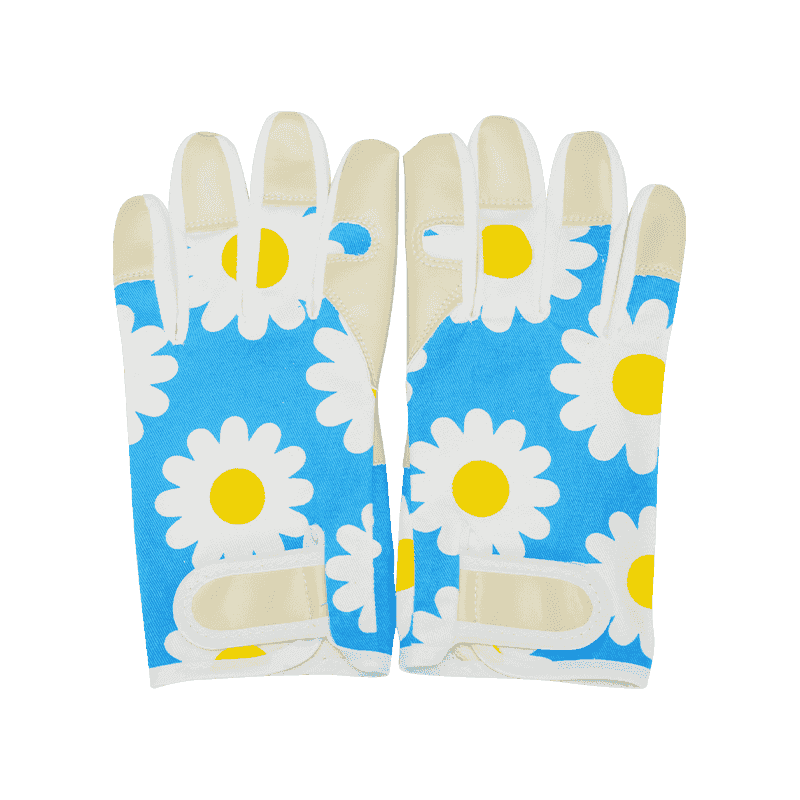 China Micro Fiber PU Synthetic Leather Gloves Suppliers, Company - Nantong Qiji Nantong Qiji Glove Co., LTD. is a China OEM/ODM Micro Fiber PU Synthetic Leather Gloves suppliers and Micro Fiber PU Synthetic Leather Gl...View Product →
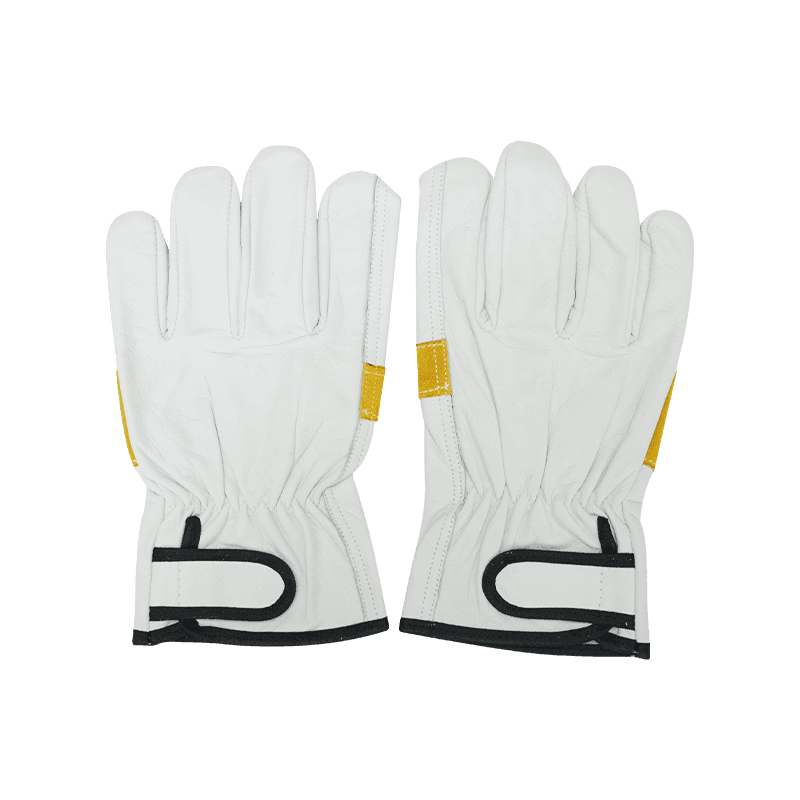
When the load is sharp, heavy, or oversized, the glove also has to absorb mechanical risk. Flat glass is the classic example: the edge can cut, the surface must remain clean, and the pane is too large for a thin film glove. Our cut-resistant cowhide leather gloves solve the problem on three levels: the leather grain stops fingerprint transfer, the hide absorbs hand moisture, and the cut-resistant construction reduces sharp-edge injuries during lifting and positioning.
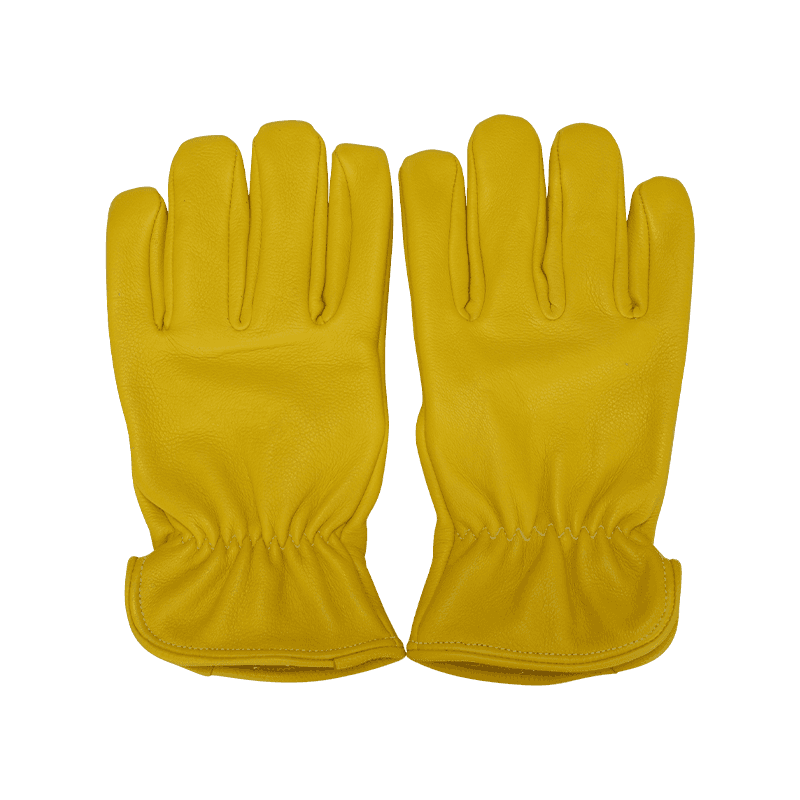 China Cut-resistant Cowhide Leather Gloves Suppliers, Company - Nantong Qiji GloNantong Qiji Glove Co., LTD. is a China OEM/ODM Cut-resistant Cowhide Leather Gloves suppliers and Cut-resistant Cowhide Leather Gloves c...View Product →
The right model depends less on the glove name than on the surface you are protecting and the hazard you are facing. The table below compresses the most common fingerprint-sensitive jobs into a quick selection guide.
| Application | Recommended glove | Why this pairing works |
|---|---|---|
| Flat glass installation | Cut-resistant cowhide | Natural grain prevents prints; cut resistance handles sharp edges |
| Stainless steel equipment | Grain cowhide work glove | No visible smudges; high abrasion resistance |
| Automotive painted panels | Microfiber synthetic leather | Lint-free surface; no polishing or handling marks |
| Electronics assembly | PU-coated knitted glove | Thin coating blocks skin oils while preserving touch sensitivity |
| Laboratory and optical work | PU-coated knitted glove | Reliable grip without direct skin contact |
| Marble and stone fabrication | Cow grain leather work glove | Durable, moisture-blocking, pattern-free contact surface |
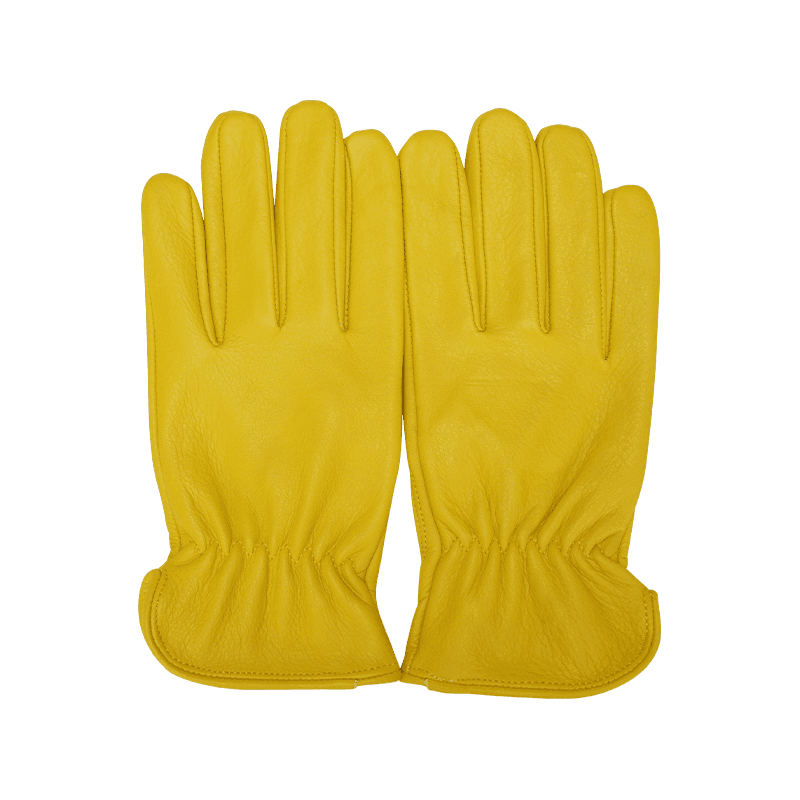
For routine material handling where sharp edges are not the main risk, the cow grain leather work gloves offer durable, print-free grip on fabricated parts, packaging, and construction components.
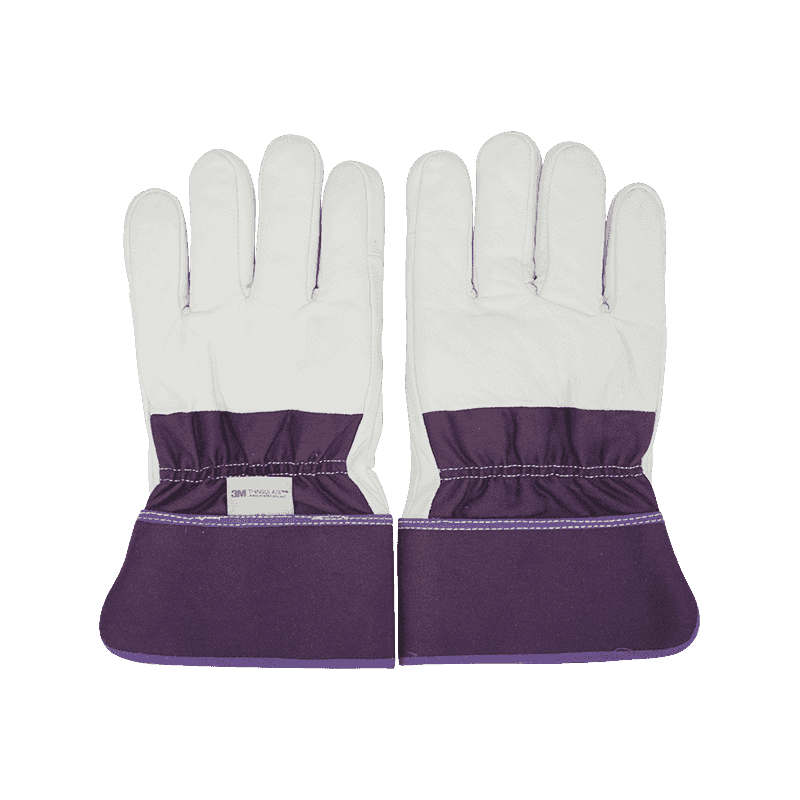 China Cow Grain Leather Work Gloves Suppliers, Company - Nantong Qiji Glove Co.,Nantong Qiji Glove Co., LTD. is a China OEM/ODM Cow Grain Leather Work Gloves suppliers and Cow Grain Leather Work Gloves company, profes...View Product →
When the choice narrows to coated synthetics versus leather, grip sensitivity, part weight, and edge hazard decide the outcome. The two columns below summarize the practical distinction.
|
Choose coated or microfiber when
|
Choose leather when
|
Wholesale buyers can explore both families inside the functional glove collection on our website. For glass or sheet-metal applications, review how leather cut resistance is actually determined before ordering, because EN 388 and ANSI/ISEA ratings are not directly comparable.
A local distributor can supply standard nitrile boxes, but industrial volumes deserve better material control. Working with a glove manufacturer changes the conversation: you can select the leather grade, coating, cuff style, and packaging. When a wholesale buyer asks our factory in Rugao, near Shanghai, for gloves that don't leave fingerprints, the first question we ask is: "What surface are you protecting and what is the main hazard?" The answer determines the palm material, grain type, and level of mechanical protection.
Nantong Qiji Glove Co., Ltd. has produced leather work gloves since 1988 with an annual capacity of two million pairs, and most functional models can carry a private label. A practical starting point for procurement teams is the complete industrial glove catalog, where each series lists the leather type and protection level. Wholesale pricing and sample evaluation are handled directly by our export team, so you can test before committing to a container.
These questions come up in almost every procurement conversation about what gloves don't leave fingerprints, so they are worth answering in detail.
Do nitrile gloves leave fingerprints?Standard nitrile gloves reduce fingerprints but do not guarantee a completely clean surface. The film is smooth and thin, so under firm grip or sweaty hands it can transfer the ridge pattern. Powder-free nitrile with a matte or textured finish performs better; for glass and polished metal, coated knitted or leather gloves are more reliable. |
What are the best gloves for handling glass without marks?Cut-resistant cowhide leather gloves are the most practical answer for flat glass. The natural grain does not reproduce the finger ridge pattern, the leather absorbs hand moisture, and the cut-resistant construction protects against razor-sharp edges during lifting and installation. |
Are leather work gloves genuinely fingerprint-free?Yes, as long as the leather surface is clean and dry. A good leather grain has a random, uneven topography, so any residue is transferred in a scattered form instead of a recognizable print. Like any glove, leather gloves must be cleaned when they become covered with grease or dust; contamination, not the leather itself, is what causes smeary marks. |
Do cotton or knitted gloves leave fingerprints?Knitted fabrics do not reproduce the ridge pattern, but they absorb skin oils and can transfer streaks onto glass or painted surfaces. A coated knitted glove, such as a PU-coated model, is a better choice because the coating blocks the oils before they reach the surface. |
What should a buyer ask a glove supplier before a wholesale order?Start with material composition, surface finish, cut-resistance test standard, and coating method. Then confirm the MOQ, lead time, private-label options, and sample policy. For fingerprint-sensitive work, ask the supplier to test the gloves on the actual surface you handle, because results on a desk do not always match results on glass or steel. |
Start with the surface you are protecting, not with the glove rack. For light, clean, low-risk handling, powder-free nitrile or PU-coated knitted gloves are enough. For heavy, sharp, or high-value materials, switch to grain leather or cut-resistant leather gloves, which keep prints away and protect the hand at the same time. Buyers who work through a glove manufacturer, supplier, or wholesaler should verify surface finish, coating method, and cut-resistance documentation before committing to a large order.
If you are interested in our products, please consult us
 +86-0513-68163373