


 English
 Français
News
Home / News / Industry News / How to Determine Glove Size: The Complete Guide for Industrial Work Gloves

A maintenance supervisor at a metal fabrication plant once ordered a single glove size for the entire crew to simplify inventory. Within two weeks, three workers reported hand cramps, and one dropped a steel bracket because the glove slipped at the moment of lifting. The glove model was not the problem; the size was. This same pattern appears across industrial purchasing every day: when employees complain that gloves feel tight, stiff, hard to grip with, or dangerously loose, the real cause is almost always incorrect sizing rather than poor glove quality.
This guide explains how to determine glove size precisely, whether you are a safety officer equipping a workshop, a wholesaler evaluating a glove manufacturer’s size chart, or a professional looking for a durable pair of leather work gloves. You need two measurements, one reliable size chart, and a few minutes of attention to detail. Once you understand how each measurement relates to the fit of the glove, you will be able to order the correct size every time, for yourself and for the people on your team.
Content
Every glove sizing system used by established glove suppliers is built on the same two inputs: the circumference of the hand around the knuckles and the overall length of the hand. Understanding what each measurement controls will help you interpret size numbers correctly instead of simply picking the first letter that seems close enough. When a glove manufacturer designs a size range, they cut the palm, fingers, and thumb based on these two dimensions. If either measurement is wrong, the entire fit profile shifts.
Palm circumference, also called hand circumference, is the main number that determines glove size. It is measured around the widest part of the hand at the knuckles, with the thumb excluded. To get an accurate reading, wrap a flexible cloth tape measure around your dominant hand just below the knuckle joints, keeping the tape snug against the skin without compressing it. Read the measurement in inches or centimetres, depending on which unit the glove manufacturer’s size chart uses.
This number controls how tightly the glove fits across the palm, how much dexterity you retain, and how securely the glove grips tools and materials. A glove that is too small across the palm will compress the hand and reduce blood flow, which accelerates fatigue during long shifts. A glove that is too large will bunch up inside the fingers, reduce tactile feedback, and create friction points that irritate the skin. In impact-resistant and cut-resistant gloves, an incorrect palm fit also compromises the positioning of the protective padding over the knuckles and metacarpal area.
Hand length is measured from the tip of the middle finger to the wrist crease at the base of the palm. This measurement tells you whether a given size leaves enough room for the fingers. Many workers focus on palm circumference and ignore hand length, but a mismatch between the two is surprisingly common. A worker can have a size 9 palm circumference and a size 8 hand length, or the reverse, and either combination produces a noticeably awkward fit.
When hand length places you at the upper boundary of a size range, it is usually wise to consider the next size up, particularly if the glove includes a thick liner, padded back, or waterproof membrane. These features take up internal space, and the extra bulk shortens the effective finger cavity. In 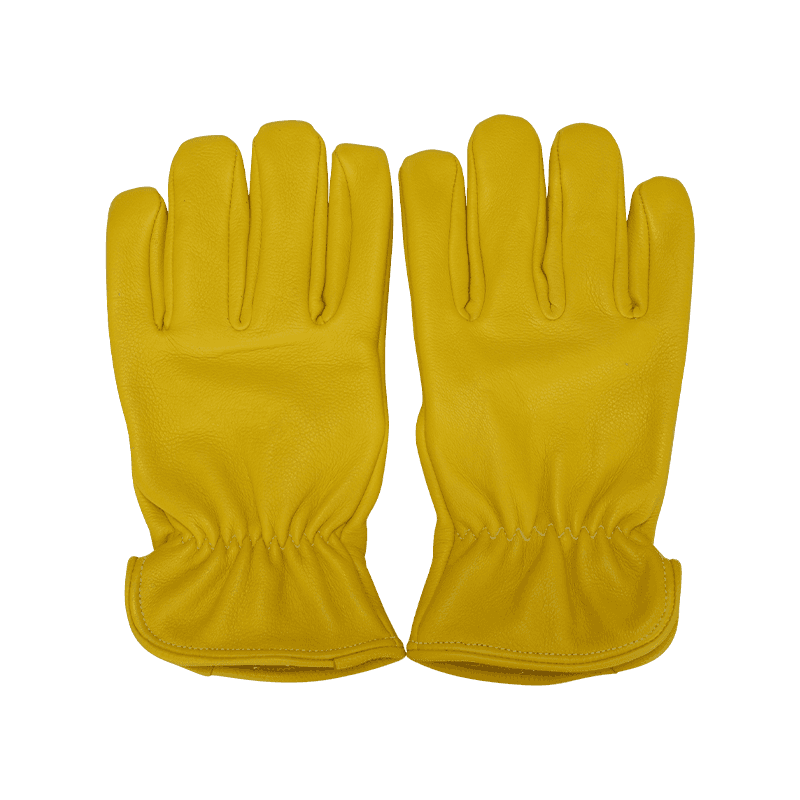 Cut-resistant Cowhide Leather Gloves with Impact PaddingThese ergonomically designed cowhide gloves combine cut-resistant material with impact padding, making them relevant when considering how extra bulk affects sizing and finger room.View Product → cut-resistant cowhide leather gloves with impact padding, the difference of one size often decides whether the wearer can grip a tool naturally or has to fight the glove on every bend of the finger.
The following table summarises the correct measuring procedure. Follow each step in order, and record both numbers before comparing them to any size chart.
| Step | What to Do | Pro Tip |
|---|---|---|
| 1 | Place your dominant hand flat on a table with fingers together. | Keep the hand relaxed; do not spread the fingers or curl the palm. |
| 2 | Wrap a cloth tape measure around the knuckles, excluding the thumb. | The tape should sit at the widest point of the palm, not over the thumb muscle. |
| 3 | Note the circumference in inches or centimetres. | Take the reading twice to confirm accuracy. |
| 4 | Measure from the tip of the middle finger to the wrist crease. | Use a ruler if you do not have a flexible tape measure. |
| 5 | Compare both measurements with the size chart. | If the two numbers suggest different sizes, follow the larger measurement. |
Measure both hands, not just one. Your dominant hand is usually slightly larger, and glove sizing should follow the larger hand. Trying to force the dominant hand into a glove sized for the non-dominant hand will simply accelerate wear in the palm and reduce control. For the majority of workers, the difference is only a few millimetres, but those millimetres are enough to change the fit rating on a standard glove size chart.
Once the two measurements are recorded, the next step is interpreting the size chart correctly. Glove size charts are not universal. Dress gloves, industrial work gloves, welding gloves, and cold-resistant gloves all use slightly different conventions. Always consult the specific chart provided by the glove manufacturer or supplier rather than relying on a generic letter designation from memory.
Most industrial work glove charts follow a numeric system based on inches of palm circumference: a size 7 glove fits a hand circumference of roughly 7 inches, a size 8 glove fits 8 inches, and so on. Letter sizes such as S, M, L, XL, and XXL are derived from the same numeric ranges but apply across a broader span, which makes them less precise for selecting a professional work glove.
| Glove Size | Palm Circumference (in) | Palm Circumference (mm) | Hand Length (in) | Hand Length (mm) |
|---|---|---|---|---|
| 7 | 7.0–7.9 | 178–203 | 6.7–7.1 | 170–180 |
| 8 | 8.0–8.9 | 204–229 | 7.1–7.5 | 180–190 |
| 9 | 9.0–9.9 | 230–254 | 7.5–7.9 | 190–200 |
| 10 | 10.0–10.9 | 255–279 | 7.9–8.3 | 200–210 |
| 11 | 11.0–11.9 | 280–305 | 8.3–8.7 | 210–220 |
| 12 | 12.0–12.9 | 306–330 | 8.7–9.1 | 220–230 |
| Glove Size | Palm Circumference (in) | Palm Circumference (mm) | Hand Length (in) | Hand Length (mm) |
|---|---|---|---|---|
| 6 | 6.0–6.9 | 152–178 | 6.3–6.7 | 160–170 |
| 7 | 7.0–7.9 | 178–203 | 6.7–7.1 | 170–180 |
| 8 | 8.0–8.9 | 204–229 | 7.1–7.5 | 180–190 |
The visual chart below presents the palm circumference ranges for men’s glove sizes 7 through 12 as horizontal bars. Each bar represents the full acceptable circumference span for that size. The bars shift progressively to the right as the glove size increases. This layout makes it easy to see how much separation exists between adjacent sizes. It also explains why measuring precisely is more valuable than memorising a single size number.
Looking at the bar chart, a clear pattern emerges: each glove size occupies a range of roughly 24 to 27 millimetres of palm circumference. The step between adjacent sizes is also close to 25 millimetres, which means the ranges barely overlap. In practice, a hand circumference of 229 millimetres sits exactly at the boundary between size 8 and size 9. This is why the measuring technique matters so much; pulling the tape just a few millimetres tighter can push the result across an entire size boundary.
For a glove manufacturer, this boundary behaviour has direct consequences for production and inventory planning. A worker whose hand measures 231 millimetres should choose size 9, not size 8, because the extra two millimetres will create uncomfortable pressure across the knuckles during extended use. In cold-environment and waterproof work gloves, the thermal liner adds further bulk, so the effective fit requires an additional size allowance on top of the base measurement. The chart also demonstrates the value of using hand length as a secondary check; a size 10 palm circumference combined with a short hand length can leave the glove fingers extending past the fingertips.
In cut-resistant and impact-resistant gloves, that over-length can interfere with grip and make precision work much harder. The visual representation confirms that glove sizing is a range-based system, not an exact point system. Measuring to the nearest millimetre and rounding upward at a boundary will always produce a safer and more comfortable fit. When a supplier lists both numeric and letter sizes on the same chart, the numeric measurement is the more reliable reference because it maps directly to the physical dimension of the hand.
Even experienced buyers make sizing errors that a few extra seconds of careful measurement would have prevented. The five mistakes below are the most frequent reasons why well-made gloves end up causing discomfort or are returned by customers.
These mistakes appear in both individual purchases and large wholesale orders. When a procurement team decides to standardise on one size for an entire workforce, the consequences are predictable: some workers receive gloves that compress their hands, and others receive gloves that slip. The same five-minute measuring routine that works for one person becomes even more useful when applied to a team, because the distribution of hand sizes across the group will quickly show which sizes need to be ordered in the largest quantities.
For a glove manufacturer or supplier, clear size charts and physical samples are the two most effective tools for reducing sizing-related returns. If you are managing a buying process, always request the supplier’s official size chart in advance and confirm that the chart matches the specific production line. Some factories adjust their patterns slightly between product families, so a chart that applies to one model may not apply perfectly to another.
Many first-time buyers ask why the size they wear in a formal leather glove does not match the size they need in a work glove. The answer lies in the intended fit philosophy of each product category. Dress gloves are designed to fit closely and elegantly, with minimum excess material around the palm and fingers. Work gloves, particularly those used for welding, handling rough materials, or operating machinery, allow a slightly more generous fit to support flexibility, grip, and the use of liners or protective padding.
The comparison below outlines the main differences between the two categories.
Dress GlovesFit philosophy: Close-fitting, elegant, minimal excess fabric or leather. Measurement priority: Hand circumference is used almost alone; length is secondary because dress gloves run in standardised fashion sizes. Material behaviour: Usually made of thin, supple leather or fabric that conforms quickly; minimal stretch allowance needed. When to size up: Rarely. A tight dress glove is considered normal and will soften with wear. |
Work GlovesFit philosophy: Comfortable, protective, with room for liner layers and hand movement during repetitive tasks. Measurement priority: Both palm circumference and hand length are essential, especially for padded, impact-resistant, and welding models. Material behaviour: Thicker cowhide, goatskin, pigskin, or synthetic leather; stretch varies significantly by material and lining. When to size up: When a thermal or cut-resistant liner is included, or when the measurement lands at the upper edge of a range. |
The same measuring principles apply to both categories: measure the dominant hand, use a cloth tape, and compare the numbers with the correct chart. However, the fit tolerance is different. A dress glove should feel snug from the first wear, while a work glove should feel comfortably secure without compressing the hand. When you order leather work gloves from a manufacturer, remember that the leather will soften and conform after a few days of use, so a glove that feels almost too tight across the knuckles in the warehouse will often become perfectly comfortable after a week on the job.
Leather is a natural material, and its reaction to tension varies considerably depending on the animal hide and the tanning process. For this reason, the same nominal glove size can feel completely different from one leather type to another. When a glove manufacturer selects a hide for a specific product, the material’s stretch characteristics are part of the design decision, and the buyer should consider them when choosing a size.
Cowhide is the most common leather used in industrial work gloves. It is durable, abrasion-resistant, and offers moderate stretch. A cowhide glove that fits snugly at first will loosen slightly over the first several days of use, but it will not deform dramatically. For most wearers, ordering exactly to the measured size works well. If the hand length measurement sits at the top of a range, sizing up is a reasonable strategy because cowhide retains its shape longer than softer leathers.
Goatskin is softer, lighter, and more flexible than cowhide. It conforms to the hand quickly and provides excellent dexterity, which is why it is popular for precision work and driving gloves. Because goatskin stretches more noticeably, some wearers choose one size down when they expect the glove to relax after a break-in period. However, in applications where the glove must provide a high level of cut or impact protection, it is safer to keep the exact measured size.
Sheepskin is the softest and most supple of the common glove leathers. It offers outstanding comfort and warmth but less abrasion resistance than cowhide or goatskin. Sheepskin gloves stretch the most during wear and can become loose if the initial fit is generous. When measuring for sheepskin gloves, order the exact size or reduce by half a size if you prefer a firmer grip.
Pigskin has a distinctive texture and stays breathable because of its porous surface. It is stiffer than goatskin and does not stretch as readily. Pigskin gloves, such as those used in gardening and general handling tasks, tend to hold their original fit for a long time. If a pigskin glove feels tight at the start, it will likely remain tight; size up instead of waiting for the material to yield.
Understanding the material behaviour of your gloves helps you make smarter sizing decisions and reduces the risk of ordering a product that needs to be returned or replaced. For a deeper look at how raw materials influence the fit, durability, and protective performance of leather work gloves, see our article on the material composition of our company’s gloves.
Specialised gloves place unique demands on sizing because they combine protective features that change the internal volume of the glove. Welding gloves, cold-resistant gloves, and cut-resistant gloves each require a slightly different sizing strategy, even when the wearer’s measurements are identical.
Welding gloves must protect the hands from heat, sparks, and molten splatter while still allowing the welder to grip a torch, rod, or workpiece with reasonable dexterity. The fit should be snug enough across the palm to keep the glove stable during precise movements, but generous enough in the fingers to allow flexing without resistance. Many welding glove models include a gauntlet cuff, so the wrist and forearm measurements are also relevant. If a welding glove is too large, the excess leather in the fingers can double the time it takes to control a TIG torch. If it is too small, the welder will lose dexterity because blood flow to the fingertips is restricted.
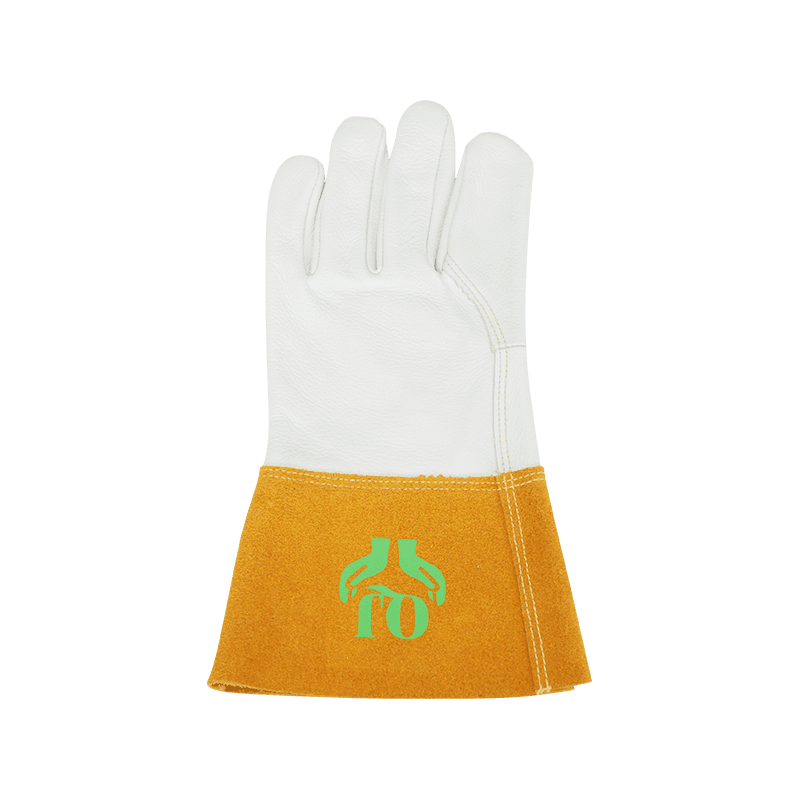 Cowhide Leather Welding Gloves for Arc and TIG WorkDesigned to resist heat, sparks, and splatter, these durable cowhide welding gloves matter because fit precision directly influences dexterity and torch control during welding.View Product →
For standard arc welding tasks, cowhide welding gloves in the wearer’s exact measured size are the safest choice. For TIG welding, where the hand performs much finer movements, many welders prefer a half size smaller in the fingers and a palm fit that follows their normal measurement. The heat-resistant lining used in some welding gloves also reduces the internal volume, so always check whether the glove model you are considering has an internal liner before selecting a size.
Cold-resistant waterproof gloves are typically built with a thermal lining and a waterproof membrane sandwiched between the outer leather shell and the inner liner. These extra layers consume significant internal volume. A glove that fits perfectly without a liner will feel tight when the liner is present. As a general rule, if your palm circumference falls near the upper half of a size range, choose the next size up for cold-resistant gloves. This allows the lining to loft properly and maintain its insulating air layer, which is essential for keeping the hands warm in freezing conditions.
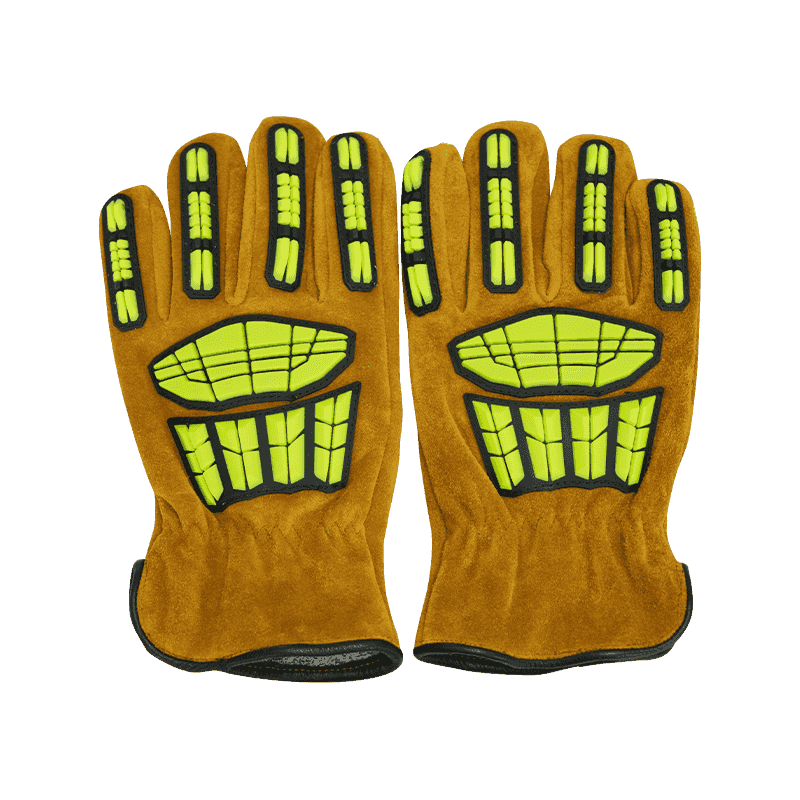 Waterproof, Oil-resistant, Cold-resistant Cowhide GlovesFeaturing waterproofing, oil resistance, cold protection, impact padding, and cut-resistant lining, these gloves suit wet or cold work where internal liner volume affects sizing.View Product →
Waterproof gloves also tend to be less breathable, which means sweat can accumulate inside during prolonged use. A slightly larger fit improves airflow and reduces the dampness that leads to cold hands in winter temperatures. For workers who handle oily or wet materials, the extra space also makes the glove easier to remove after a shift. The tradeoff is a small reduction in fingertip sensitivity, but that reduction is preferable to a glove that compresses the hand and accelerates fatigue in cold conditions.
Cut-resistant gloves use high-performance yarns and, in the case of leather-reinforced models, additional panels of cowhide or goatskin over the palm and fingers. The level of cut protection ranges from lighter ANSI A2/A3 levels to heavier A5/A6 configurations. Higher protection levels typically use denser yarns and thicker coatings, which reduce flexibility. A snug fit improves precision and prevents the glove from rotating on the hand during cutting tasks, which is a major cause of blisters and hot spots. When the glove includes both cut-resistant lining and a leather outer shell, pay close attention to hand length, because the layered construction shortens the effective finger cavities. For more detail on balancing protection and flexibility, read our guide on safety and flexibility when using cut-resistant cowhide leather gloves.
Cut-resistant Cowhide Leather Gloves with Impact PaddingThese ergonomically designed cowhide gloves combine cut-resistant material with impact padding, making them relevant when considering how extra bulk affects sizing and finger room.View Product →
When gloves are purchased in bulk for a factory, warehouse, or resale business, sizing consistency becomes a procurement issue rather than a personal convenience issue. A glove manufacturer that cuts patterns according to standardised measurements produces more predictable sizing across production lots. This is why reviewing the supplier’s size chart before placing a wholesale order is an essential step, not an optional one.
For wholesalers and distributors, the most valuable practice is to maintain a small reference set of size samples for each product line. Customers who can physically try on a sample glove before ordering are significantly less likely to request returns or exchanges. If physical sampling is not possible, provide the customer with a detailed size chart that includes both palm circumference and hand length, preferably with the measurements expressed in both inches and millimetres. Clear communication about fit expectations reduces the cost of returns for the supplier and the frustration for the end user.
Buyers should also be aware that the same size designation can differ slightly from one factory to another. A size 9 glove produced by one manufacturer may measure 230 to 254 millimetres in palm circumference, while another factory uses 235 to 260 millimetres. When you are sourcing from a new supplier, always request the actual specification sheet rather than relying on the size label alone. This is especially important when suppliers manufacture custom or OEM products, because the pattern dimensions are set by the buyer during the product development stage.
For teams that need to equip large groups of workers, the best approach is to measure the hand size distribution of the workforce and order a proportional mix of sizes rather than defaulting to one or two mid-range sizes. A typical distribution across a male-dominated production team might show a concentration in sizes 9 and 10, but a surprising number of workers will still require sizes 8 or 11. Ordering the correct size mix not only improves comfort and safety but also extends the service life of the gloves, since workers are less likely to discard or abuse gloves that fit properly.
Below are the questions buyers most often ask about glove sizing, with the answers that experienced safety officers and glove manufacturers would give.
Choose the larger size when the glove includes a liner, padding, or a waterproof membrane. Choose the smaller size when the glove is unlined and made of a leather that stretches noticeably, such as goatskin. If you are working in a precision task that requires maximum fingertip sensitivity, the larger size is still usually safer because it avoids circulation problems during extended wear.
Measure your dominant hand first, because it is typically slightly larger and it is the hand that does the most work. Then measure the non-dominant hand as a check. If the two measurements differ, order the size that fits the larger hand. This is the standard rule used by work glove manufacturers and safety consultants.
The tape should touch the skin along its entire path without leaving a mark. A common way to test this is to slide one finger underneath the tape after measuring; if the finger fits comfortably, the tension is close to correct. For most glove sizing purposes, the tape should be as snug as you would want the final glove to feel across the back of your hand.
Most leather work gloves soften and conform to the hand after several days of use, but the degree of stretch depends on the hide. Cowhide stretches moderately, goatskin and sheepskin stretch more readily, and pigskin holds its shape. A glove should never be purchased with the plan that it will be painful at first and stretch into comfort; a properly sized glove should feel reasonably comfortable from the first day.
Yes. Cold-resistant gloves contain a thermal liner and often a waterproof membrane that take up internal space. If your palm circumference falls in the upper half of a size range, choose one size up. If your measurement is exactly on the boundary, the larger size is the safer option for maintaining the insulating layer and avoiding compression of the fingers in freezing conditions.
If the person is available, follow the standard measuring routine for both hand circumference and hand length. If they are not available, ask for the size of a glove they currently wear and compare that with the manufacturer’s chart. As a last resort, estimate from general body size, but this method is unreliable for work gloves and should only be used for low-risk applications.
Three factors change the fit between models: the leather type, the presence of a liner or padding, and the cutting pattern used by the manufacturer. A goatskin glove in size 9 can feel roomier than a pigskin glove in size 9 in the same brand. Always rely on the actual measurements in the product-specific size chart rather than transferring your size from one model to another.
No. Welding gloves are designed with added heat-resistant material and often a longer gauntlet, so they fit differently around the wrist and forearm. In the palm, a welding glove should still follow the wearer’s measured size, but the fingers may feel slightly more restrictive because of the thick outer leather. Some welders prefer a slightly smaller palm fit for torch control and a looser fit in the fingers for flexing.
Numeric sizes, such as 7, 8, 9, 10, are based directly on inches of palm circumference and are commonly used for industrial and leather work gloves. Letter sizes, such as M, L, and XL, cover broader ranges and are more common in consumer and disposable gloves. For professional work gloves, numeric sizes give you a more precise fit and are easier to compare across manufacturers who follow similar standards.
We started this guide with a practical observation: most glove fit problems come from incorrect sizing, not from defective products. Once you measure your hand correctly, read the right chart, and account for leather type and work conditions, you can select the correct glove size with confidence every time. Accurate sizing improves safety, comfort, and the service life of the glove. It also reduces the cost of returns and replacements for individual buyers and wholesale purchasers alike.
If you are sourcing gloves for a team or a business, ask your glove manufacturer or supplier for the original size chart and a set of physical samples before committing to a large order. The five minutes spent measuring hands is a small investment compared with the benefit of gloves that fit correctly on the first try. Whether you choose cowhide, goatskin, pigskin, or synthetic leather, a properly sized glove is the difference between a reliable piece of protective equipment and a constant source of distraction on the job.
If you are interested in our products, please consult us
 +86-0513-68163373