


 English
 Français
News
Home / News / Industry News / How Many Times Can Disposable Gloves Be Worn? Single-Use Rules Explained

If you are asking how many times disposable gloves can be worn, the direct answer is once. Disposable gloves are manufactured, validated, and labelled as single-use protective devices. Wearing the same pair twice, even for a seemingly simple task, introduces contamination risks that the CDC, the World Health Organization, and European medical device standards all advise against. This article explains the science behind the single-use rule, the rare crisis-only exceptions, and the practical alternatives that reusable leather work gloves offer for industrial applications. By the end, you will have a clear replacement policy that you can apply to your own workplace or supply chain.
This guide is written for both individual users and bulk buyers. Whether you are a safety manager standardising a glove-use policy, a procurement officer comparing costs, or an importer evaluating glove manufacturers, the same principle applies across every scenario: the correct glove is the one matched to the hazard, and the correct replacement schedule is the one backed by evidence, not by habit.
Content
The word disposable is not a marketing suggestion; it is a design specification. Disposable gloves are made from thin polymer films, typically nitrile, latex, or vinyl, with a wall thickness between 0.05 and 0.15 millimetres. That film is engineered to serve as a barrier for one procedure, one patient contact, or one cleaning task. Once stretched over the hand, the material begins to relax, micro-tears form, and barrier integrity declines even when the damage is invisible to the naked eye.
Regulatory standards reinforce this single-use interpretation. Nitrile and latex examination gloves sold in the European Union must meet EN 455, a standard that tests integrity on new, unused gloves. In the United States, the FDA applies similar single-use assumptions in its 510(k) clearance process. Neither framework includes a protocol for reusing a glove after it has been worn, because no manufacturer can guarantee barrier performance after the first use.
Infection-control guidance is equally clear. The World Health Organization states that gloves must be changed between tasks and between patients. The CDC specifies that gloves are not to be washed or reused. This applies even if the glove looks clean, because contaminants can remain on the surface and washing does not restore the original barrier properties. For buyers comparing disposable versus reusable gloves, this means the decision is not about convenience but about certification and risk control.
Disposable gloves also come in different grades that people sometimes confuse. Examination gloves, industrial gloves, and household gloves are all single-use, but their test levels and intended uses differ. An examination glove is tested for virus penetration and meets medical standards; an industrial disposable glove may only meet basic liquid-barrier tests. Neither type becomes reusable simply because it is thicker or more expensive. The one-use rule applies across the entire category.
The most common mistake is removing gloves and putting them back on later, assuming that you are still protected. In reality, you may be spreading contamination rather than preventing it. This is not a theoretical concern; it is a mechanism that infection-control professionals observe every day in hospitals, food kitchens, and cleaning crews.
Consider what happens during a typical task. You put on a clean pair of gloves and touch a surface carrying bacteria or viruses. The glove surface becomes contaminated. When you remove the gloves using the pinch-and-peel technique, the outside is turned inward, temporarily isolating the contaminant. If you put the same gloves back on, you reverse the fold, and the contaminated outer surface now contacts your bare hand, your other hand, and everything you touch afterward. The glove that was supposed to protect you has become a vehicle for transferring pathogens.
Research on gloved-hand contact in healthcare settings shows that pathogens such as norovirus, MRSA, and respiratory viruses transfer readily from surfaces to gloved fingers and then to other surfaces, often at rates of 30 to 60 percent per contact event. A single contaminated glove can theoretically contaminate dozens of fixtures, tools, or doorknobs before anyone notices. This is why the single-use rule is so strict: the moment a glove has touched anything, it must be assumed to carry whatever was on that surface.
Some readers may recall reports about a University of Waterloo study suggesting that disposable gloves could be reused up to 20 times with the right disinfection method. It is important to understand the context of that study. It was conducted during a severe PPE shortage to evaluate whether medical-grade gloves could be reprocessed with a validated disinfectant for crisis-capacity situations. The study did not say that reuse is safe under normal working conditions, and it did not meet the regulatory requirements for routine clinical use. Health authorities still classify routine reuse as unsafe.
There is also a skin-health dimension. Wearing the same gloves repeatedly traps sweat and moisture against the skin, which breaks down the outer layer of the epidermis and can cause irritant contact dermatitis. Weakened skin increases infection risk for the wearer, which defeats a central purpose of wearing gloves in the first place. Occupational health programmes treat glove-related skin problems as a preventable injury category, not a cosmetic concern.
The question of how many times disposable gloves can be worn is different from how long one pair can stay on during a single continuous session. For one continuous session, most occupational health guidance recommends changing disposable gloves every 20 to 40 minutes, depending on the intensity of the task. Some tasks require changes even more frequently.
The reason for this short window is a combination of hygiene and material fatigue. As you work, your hands sweat inside the glove. The interior becomes moist, which promotes bacterial growth and makes the polymer film more pliable and more likely to tear. Repetitive friction from gripping tools, opening jars, or handling packaged goods stretches the film and creates microscopic defects. The longer the gloves stay on, the greater the chance that those defects become visible rips or that the glove slips and exposes your skin.
Certain tasks demand more frequent changes. Workers who handle chemicals, oils, or solvents should change gloves as soon as the exterior shows any sign of degradation. Food handlers should change gloves when switching between raw and ready-to-eat food, after handling money, and after any interruption that could introduce contamination. In healthcare, the general rule is to change gloves between patients and between different care activities for the same patient.
| Glove category | Recommended max continuous wear | Indicators that it is time to change |
|---|---|---|
| Nitrile examination gloves | 20-40 minutes | Damp interior, visible tear, reduced surface grip |
| Latex examination gloves | 20-30 minutes | Reduced elasticity, stickiness, visible damage |
| Vinyl disposable gloves | 15-20 minutes | Loose fit, stretching, holes |
| Household rubber gloves | 1-2 hours | Wet inside, odour, cracks at the cuff |
| Reusable leather work gloves | Full shift with inspection | Worn seams, hardened leather, punctures |
A practical rule for supervisors is to set a change reminder for tasks that extend beyond 30 minutes and to keep spare glove dispensers at every workstation. If the task generates heavy sweat, heat, or friction, shorten the interval to 20 minutes. Time-based replacement is a minimum standard; any visible damage means you change immediately, regardless of how long the gloves have been on.
Visualising wear duration helps safety managers set realistic replacement schedules. The chart below compares typical recommended maximum continuous wear times across common glove categories. Disposable vinyl gloves rank the lowest because the polymer film thins quickly during repetitive motion. Nitrile and latex examination gloves last slightly longer but still measure in minutes rather than hours. Reusable leather work gloves are designed for full-shift wear with scheduled inspection, which is exactly why industrial buyers choose them for heavy tasks.
This chart captures the core difference between disposable and reusable glove strategies. The first surprise for many buyers is how short the disposable glove window really is. Fifteen to thirty minutes is enough for a patient examination, a food-preparation cycle, or a quick cleaning task, but not for extended operations. The second takeaway is the sheer gap between categories: leather work gloves outlast vinyl disposables by a factor of more than 30 when maintenance is performed correctly. Third, this gap is not a flaw in disposable gloves; it is a deliberate trade-off between barrier thinness and tactile sensitivity. Fourth, for sterile, fluid-protection tasks, thin-film gloves are the right choice even though they wear out quickly.
Fifth, for mechanical hazards such as abrasion, puncture, impact, and heat, leather gloves provide protection that thin film simply cannot match. Sixth, the economic consequence is significant: a worker who changes disposable gloves eight times per shift creates more cost and waste than a worker who inspects and reuses leather gloves after each shift. Seventh, this is why wholesalers and procurement managers buy both glove families and match them to specific workstations. Eighth, if you are evaluating suppliers, ask how many shifts a leather glove is expected to survive in your actual application.
Ninth, compare that figure against the disposable glove cost per hour to calculate your total cost of protection. Tenth, remember that the 480-minute baseline for leather gloves presupposes inspection, cleaning, and prompt replacement upon damage. Eleventh, these numbers are operational baselines rather than legal limits, and your own risk assessment should always take precedence. Finally, a manufacturer-sourced glove should come with a technical datasheet stating abrasion, cut, and tear ratings that support the wear estimates.
Understanding the regulatory landscape helps both safety managers and importers make defensible decisions. Medical-grade disposable gloves in Europe are tested under EN 455, which includes requirements for freedom from holes, physical dimensions, and biocompatibility. The equivalent ASTM standards in North America, such as D3578 for latex and D6319 for nitrile, define the minimum quality and barrier properties for examination gloves. Every one of these standards assumes a new, unused glove at the moment of testing.
Reusable work gloves fall under a different set of standards. EN 388 covers mechanical risks, including abrasion resistance, blade cut resistance, tear resistance, and puncture resistance. EN 407 covers heat and flame resistance for welding and foundry gloves. These standards measure performance on new gloves as well, but the product category is designed for multiple uses, which is why the standard includes guidance on care and re-testing in some industry protocols.
What does this mean for the question of how many times disposable gloves can be worn? It means the legal and technical framework simply does not recognise reuse. There is no certified procedure for cleaning, re-sterilising, or re-certifying a single-use glove. When a manufacturer states single use on the box, that statement is part of the product's regulatory approval, not a commercial preference.
In practice, the distinction between single-use and reusable gloves should drive your entire procurement strategy. If your application falls under a standard that requires a disposable barrier, no amount of cost savings from reuse is acceptable. If your application falls under mechanical or thermal protection standards, a reusable leather glove is the intended product, and the per-hour cost is typically far lower.
Now that the wear-time difference is clear, the next question is which glove to put on when. In healthcare, food service, laboratories, and any environment where bodily fluids or chemicals may be present, disposable gloves are mandatory. No reusable glove can replace a sterile, single-use barrier in those settings.
But a large portion of everyday work involves mechanical hazards rather than biological ones: grinding metal, cutting timber, handling rough materials, operating chain saws, welding, gardening, and loading trucks. For these tasks, disposable gloves fail quickly and provide almost no impact or cut protection. Reusable leather work gloves, such as the cut-resistant cowhide models manufactured by Nantong Qiji Glove, are designed for repeated wear. They are reinforced at the palm, thumb, and finger seams to survive rough conditions, and they can be inspected and maintained over a long service life.
| Criterion | Disposable gloves | Reusable leather work gloves |
|---|---|---|
| Primary protection | Fluids, germs, light chemicals | Abrasion, cuts, heat, impact |
| Typical lifespan | One use, 15-40 minutes | Weeks to months with care |
| Cost per hour of protection | Higher when changed frequently | Lower over sustained use |
| Dexterity and feel | Excellent for fine work | Good; varies by leather type and cut |
| Breathability | Low | High due to natural leather fibres |
| Waste generated | Single-use waste with every task | Minimal |
| Industries that rely on them | Healthcare, food, pharma, cleaning | Construction, welding, forestry, logistics |
Choosing correctly depends on identifying the hazard first. If the hazard is a microbe or a corrosive liquid, use a disposable glove and change it often. If the hazard is a sharp edge, a hot spark, or a heavy impact, use a certified leather work glove and inspect it regularly. Many buyers make the mistake of purchasing whatever glove is cheapest per unit, but the correct metric is cost per hour of effective protection, not cost per box.
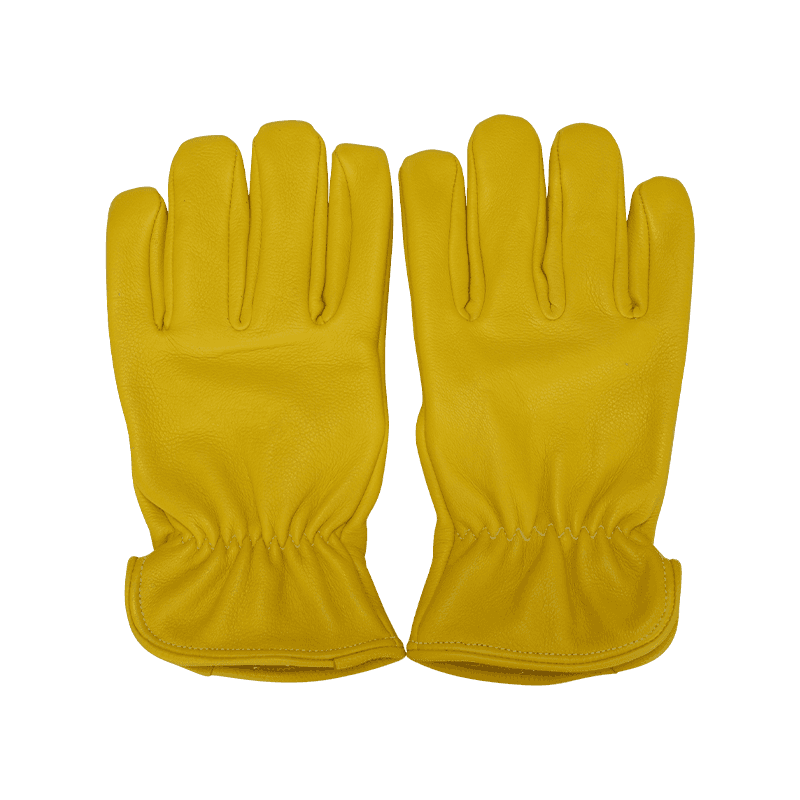 Cut-Resistant Cowhide Leather Work Gloves for Sharp-Edge HazardsThis leather glove is built for tasks involving sharp edges, hot sparks, or heavy impact where disposable gloves fail. Its ergonomic fit and breathable interior support extended wear, making it a practical choice for buyers focused on long-term protection.View Product →
The reason disposable gloves cannot simply be washed and reused is embedded in the construction itself. A disposable nitrile or latex glove is produced by dipping a hand-shaped former into liquid polymer, then curing it into a film. The finished product is deliberately thin to preserve sensation and comfort. That film has no reinforcement layer, no stitching, and no mechanism to repair itself. Once stretched, punctured, or contaminated, its protective value drops permanently.
Reusable leather work gloves are engineered on a different principle. A manufacturer selects hides for thickness, grain structure, and tensile strength. Cowhide is the most common choice for general work because it resists abrasion and heat well. Goatskin offers a softer, more flexible feel, which is why it appears in driving and precision work gloves. Pigskin stays breathable and soft even after repeated wetting and drying. After cutting and sewing, the gloves often receive extra leather patches on the palm, reinforced welting along the seams, and padded knuckles or back-of-hand protection for impact scenarios.
This structural difference explains why leather gloves can be worn day after day. The material is typically between 0.8 and 1.5 millimetres thick, roughly ten times thicker than a disposable polymer film. The natural fibres interlock in a way that resists tearing, and the porosity of leather allows moisture to escape, which keeps hands drier over a full shift. Manufacturers can also layer functions onto a leather base, adding waterproof membranes, thermal liners for cold protection, and knit liners for cut and impact resistance. The result is a multi-layer protective system rather than a single fragile film.
Cut resistance is a good example of how construction affects performance. A cut-resistant leather glove is not simply thicker leather; it combines a high-tensile liner with a leather shell so that a blade or sharp edge has to pass through multiple layers. This is the same reason why a chain-saw operator needs a specialised cut-resistant leather glove rather than a disposable nitrile glove: the thin film cannot stop a fast-moving chain, while the layered leather construction dissipates energy and prevents lacerations.
When you buy work gloves in volume, the construction details become part of your quality specification. Ask the manufacturer about the leather source, the thickness range, the thread type, and the reinforcement pattern. A glove with a single row of stitching on the palm will fail much earlier than a glove with double-stitched, bartack-reinforced seams. These details separate a genuine safety glove from a promotional item.
Safety managers and procurement officers need a decision rule that is easy to apply. I recommend categorising every task by its primary hazard and its duration. The table below provides a quick-reference guide for common scenarios. Use it as a starting point, then adjust based on your specific risk assessment and the feedback from the workers who wear the gloves every day.
| Application scenario | Recommended glove | Primary reason |
|---|---|---|
| Healthcare, patient care | Nitrile disposable | Fluid and microorganism barrier |
| Food preparation and serving | Nitrile or vinyl disposable | Hygiene, allergen separation, food safety compliance |
| Laboratory and pharmaceutical work | Nitrile disposable | Chemical splash and contamination control |
| Cleaning and janitorial work | Nitrile or household rubber | Contact with cleaning agents; frequent changes |
| Construction and metal fabrication | Cut-resistant leather work gloves | Abrasion, cut, and impact protection |
| Welding and torch work | Leather welding gloves | Heat, sparks, and molten metal resistance |
| Cold storage and wet environments | Waterproof, oil-resistant, cold-resistant leather gloves | Insulation and moisture protection |
| Gardening and landscaping | Leather garden gloves | Thorns, abrasion, and moisture |
| Driving and transport | Cowhide or goatskin driving gloves | Grip, comfort, and abrasion protection |
One common procurement error is buying a single glove model for an entire facility. A distribution centre may need touch-screen-friendly gloves for warehouse scanners, cut-resistant gloves for box-cutting stations, cold-resistant gloves for freezer aisles, and disposable gloves for break-room cleaning duties. Each task has a different risk profile, and using one glove everywhere creates both safety gaps and unnecessary costs.
When the application involves refrigeration, outdoor winter work, or exposure to water and oil, the protective requirements change completely. A typical nitrile disposable glove offers little insulation and becomes slippery when wet. A leather glove with a waterproof, oil-resistant, and cold-resistant construction keeps hands functional in temperatures that would quickly numb the fingers inside a thin polymer film. If your workforce spends significant time in cold storage or slippery, oily conditions, this category of glove deserves priority in your purchasing plan.
 Waterproof Oil-Resistant Cold-Proof Cowhide Leather GlovesThese cowhide gloves combine waterproof, oil-resistant, and cold-proof construction with padding and cut-resistant lining. They address slippery, cold, or wet conditions where thin polymer gloves become inadequate, and their shock-absorbing features reduce hand fatigue during tough work.View Product →
Welding is a demanding case because it combines several hazards at once: temperatures above 1,000 degrees Celsius at the arc, flying sparks, molten metal spatter, sharp edge burn-off, ultraviolet radiation, and heavy physical contact with steel workpieces. A disposable glove fails in the first second of any of these exposures. Nitrile ignites or melts, latex degrades instantly, and vinyl shrinks and tears.
The standard answer in every industrial market is a dedicated leather welding glove. Cowhide offers a combination of heat resistance, flexibility, and durability that no polymer film can match. Welders typically need a glove with a cuff that extends beyond the wrist to protect against sparks falling into the sleeve, as well as reinforced seams along the thumb and forefinger where the stress of holding a torch is greatest. Longer cuffs add forearm protection for overhead welding positions, while TIG welding demands a thinner, more supple glove to allow precise rod control.
For a manufacturer, producing welding gloves involves careful hide selection and layered reinforcement. The palm and index finger often receive an extra leather overlay because those areas contact hot metal most frequently. Seams are double-stitched with heat-resistant thread, and the leather is selected for its response to repeated high heat. When maintained properly, a good pair of welding gloves can last weeks or even months depending on welding hours, while a disposable glove would be destroyed in seconds on the same job.
The cost comparison is stark. A welder who attempts to use disposable gloves would need dozens of pairs per shift, and each pair would fail at the very moment protection was needed most. In addition to the direct cost, the risk of burns and lost work time far exceeds the price of a proper leather welding glove. This is why every established welding standard, from EN 407 to the various national safety codes, assumes a leather glove, not a polymer film.
 Cowhide Leather Welding Gloves for High-Temperature ProtectionDesigned to withstand high temperatures, sparks, and molten metal spatter, these cowhide welding gloves deliver durable, abrasion-resistant protection during intense welding operations. They are a reliable alternative to disposable gloves, aligning with established welding safety standards.View Product →
B2B buyers who research glove wear limits often evaluate both disposable and reusable glove suppliers at the same time. If you purchase work gloves in volume, working directly with a manufacturer is very different from buying from a distributor. You can specify materials, dimensions, reinforcement details, and packaging, and you can negotiate pricing against a real production line.
Nantong Qiji Glove is a Chinese glove manufacturer with 36 years of experience, located in Rugao, Jiangsu Province, near Shanghai. The company produces a wide range of leather work gloves for global buyers, including driving gloves, welding gloves, garden gloves, safety gloves, functional multi-hazard gloves, and PU microfiber synthetic gloves. Having started as an OEM producer, it understands how to build gloves to a customer's specification and brand requirements.
Information to prepare before contacting a factory
|
Documents to request from the supplier
|
When you approach a manufacturer directly, prepare the information listed above before sending your first inquiry. A responsible manufacturer will push back if your specification does not match the actual risk. For example, suggesting a disposable glove for a chain-saw operation would be rejected by any experienced supplier, because the correct answer is a cut-resistant leather glove with the appropriate protection standard. Similarly, specifying a thin driving glove for furnace work would be wrong.
The product range of a glove factory typically spans several distinct families. The horizontal cards below summarise the main series that a full-line leather glove manufacturer offers:
Cut, impact, waterproof, and heat resistance for multi-hazard work.
Heat-resistant cowhide, extended cuffs, and TIG-specific options.
Cowhide and goatskin models for grip, comfort, and abrasion resistance.
Natural leather with a snug fit for thorns, dirt, and garden tools.
Grain and split cowhide for general industrial duty.
Synthetic leather options for precise handling and sensitive tasks.
Because glove quality depends on the entire production chain, from hide selection to stitching and finishing, buyers should request a technical datasheet and a physical sample before placing a large order. Check the seam strength, leather thickness, flexibility, and fit. Review the manufacturer's quality control process, and clarify how defective products are handled at the container level. These details matter far more than the unit price quoted on the first email.
Reusable leather gloves last longer only when the wearer follows a few simple rules. The central idea is to inspect before each shift, clean periodically, and retire the gloves as soon as their protective layer is compromised. A glove that is never inspected is not truly reusable; it is an accident waiting to happen.
Start with a pre-shift inspection. Turn each glove inside out and check the palm for embedded metal chips or punctures, examine the seams for loose threads, and feel the leather for hard spots that may indicate heat damage or chemical degradation. Pull the fingers gently to confirm the material still has elasticity. Any sign of cracking, tearing, or excessive stiffness means the glove should be taken out of service.
Cleaning leather gloves is not the same as washing cotton workwear. Wipe away surface dirt with a slightly damp cloth and allow the gloves to dry naturally, away from radiators and direct sunlight. If the leather becomes stiff, apply a small amount of leather conditioner designed for work gloves. Never machine-wash leather gloves, and never dry them on a heater: rapid drying hardens the leather and causes fibre cracking that shortens the lifespan considerably.
Storage also matters. Leather gloves should be stored in a cool, dry place away from direct sunlight and heat sources. Storing them in a damp toolbox or near a solvent cabinet can cause the leather to absorb moisture or chemicals, which degrades the material and reduces its protective performance. If pairs are issued to individual workers, encourage them to keep the gloves in a dedicated pouch or storage area.
The replacement triggers for leather gloves are clear: visible holes or tears, hardened or charred leather, damaged stitching, permanent deformation, and loss of grip on the palm. Gloves used in extreme conditions, such as arc flash protection or high-heat welding, should be inspected and replaced according to the manufacturer's printed service interval, regardless of whether damage is visible to the naked eye.
Below are the most common questions that buyers and safety officers ask when deciding how long gloves can be worn and whether reusable leather gloves are the right investment.
How many times can disposable gloves be worn?Disposable gloves are designed to be worn once and then discarded. Wearing them more than once increases the risk of contamination, reduces barrier integrity, and violates the guidance of the CDC, WHO, and EU medical device standards. There is no safe number of reuses under normal working conditions. |
Can disposable gloves be washed and reused?No. Washing removes surface dirt but does not restore barrier integrity. The polymer film sustains invisible micro-tears during wear and stretching, and washing can degrade the material further. The CDC explicitly states that gloves are neither to be washed nor reused. |
How long can you wear disposable gloves continuously?Most occupational health guidance recommends changing disposable gloves every 20 to 40 minutes of continuous use. Heavy sweating, friction, or chemical exposure should shorten that interval to 20 minutes or less. If the glove is torn, visibly soiled, or difficult to remove, change it immediately. |
Are nitrile gloves reusable?Nitrile examination gloves are certified as single-use devices. Although nitrile resists punctures better than latex or vinyl, the certification and the contamination risk do not change. Reusable nitrile industrial gloves exist in a different category, with thicker material and a multi-use design, but they are not the same product. |
Was the University of Waterloo study saying that gloves can be reused 20 times?The study explored reprocessing disposable medical gloves with disinfection during a PPE shortage. It showed that in a crisis, some gloves could withstand up to 20 disinfection cycles. It was not a recommendation for routine use, and the researchers acknowledged that regulatory standards for single-use gloves do not cover reprocessing. |
What is the best alternative to disposable gloves for industrial work?For mechanical hazards such as cuts, abrasion, impact, and heat, reusable leather work gloves are the standard choice. Welding gloves, cut-resistant leather gloves, and waterproof cold-resistant leather gloves protect against hazards that destroy disposable films. Select the glove according to the specific risk assessment. |
How often should leather work gloves be replaced?There is no fixed calendar interval because the service life depends on usage intensity, maintenance, and the working environment. Inspect gloves before each shift, clean them properly, and replace them as soon as you see holes, tears, hardened leather, damaged stitching, or loss of grip. |
For more technical background on durable glove selection, our editorial team recommends the following article. It explains the test methods and material choices that determine how well a leather glove resists cuts and abrasion.
So, how many times can disposable gloves be worn? The evidence-based answer is one time. Whether you work in healthcare, food service, cleaning, or any environment that relies on thin-film gloves, the safest policy is to remove and discard the gloves after every use, or every 20 to 40 minutes of continuous wear, whichever comes first. The University of Waterloo disinfection study should be understood as a crisis conservation measure, not a routine practice.
For industrial tasks involving mechanical hazards, heat, cold, or rough materials, reusable leather work gloves are the more logical choice. They last for weeks or months when inspected and maintained, they protect against hazards that destroy disposable films, and they create far less waste. Partnering with an experienced glove manufacturer allows you to source products that match your specific risk profile at wholesale prices, with custom options for OEM branding and packaging.
The final decision always starts with the hazard. Define the hazard first, choose the glove category second, and set a clear replacement rule that your team can follow without ambiguity. Disposable means disposable; reusable means inspect and maintain. That distinction will keep your workers safer and your procurement budget under control.
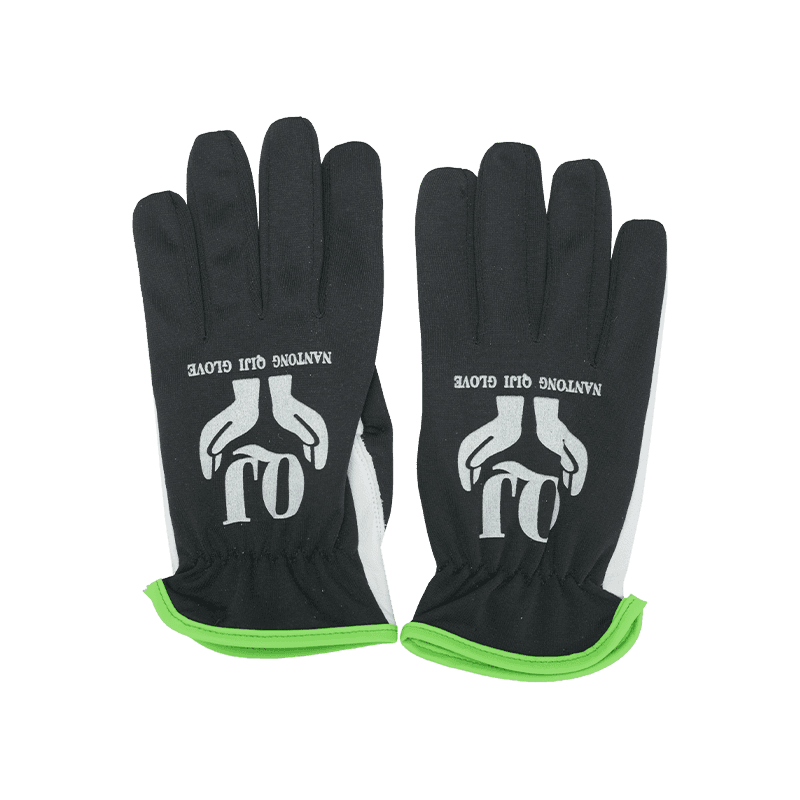

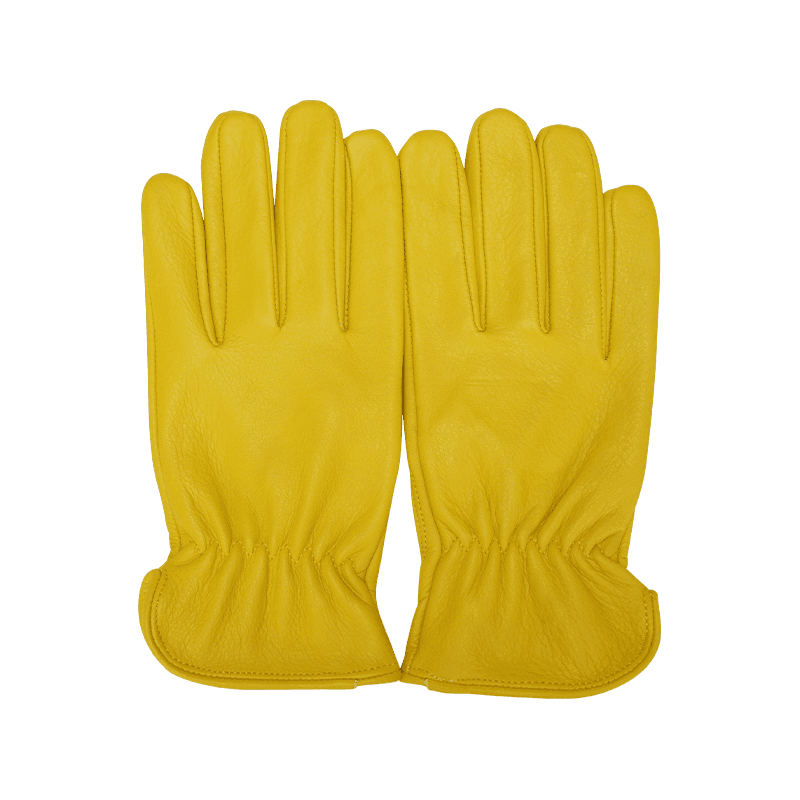
If you are interested in our products, please consult us
 +86-0513-68163373