


 English
 Français
How many types of work gloves are there?
In industrial production, construction, medical and health, and even daily housework, work gloves are indispensable personal protective equipment (PPE) for ensuring hand safety and improving work efficiency. However, when we talk about work gloves, many people only know that they protect hands, but they don't understand how many types are available on the market, or how to choose the most suitable work gloves for a specific work environment.
Content
1. Classification by Material and Purpose: Mainstream Types of Work Gloves
Work gloves are usually classified according to their manufacturing materials and the protective functions they provide.
A. Mechanical Protective Gloves
These work gloves are mainly used to protect against physical injuries such as cuts, punctures, and abrasions.
Cut-resistant gloves: Main materials include aramid (Kevlar), high-strength polyethylene (HPPE), and steel wire mesh. They are used when handling sharp objects, glass, sheet metal, etc., and effectively prevent cuts.
Puncture-resistant gloves: Usually made of specially treated leather or composite materials. Suitable for handling thorny objects, processing waste, etc., to prevent punctures from sharp objects.
A. Abrasion-resistant gloves: Commonly made of cowhide, pigskin, canvas, or nitrile-coated gloves. Widely used in daily heavy physical labor such as construction, handling, and gardening to improve the durability of work gloves.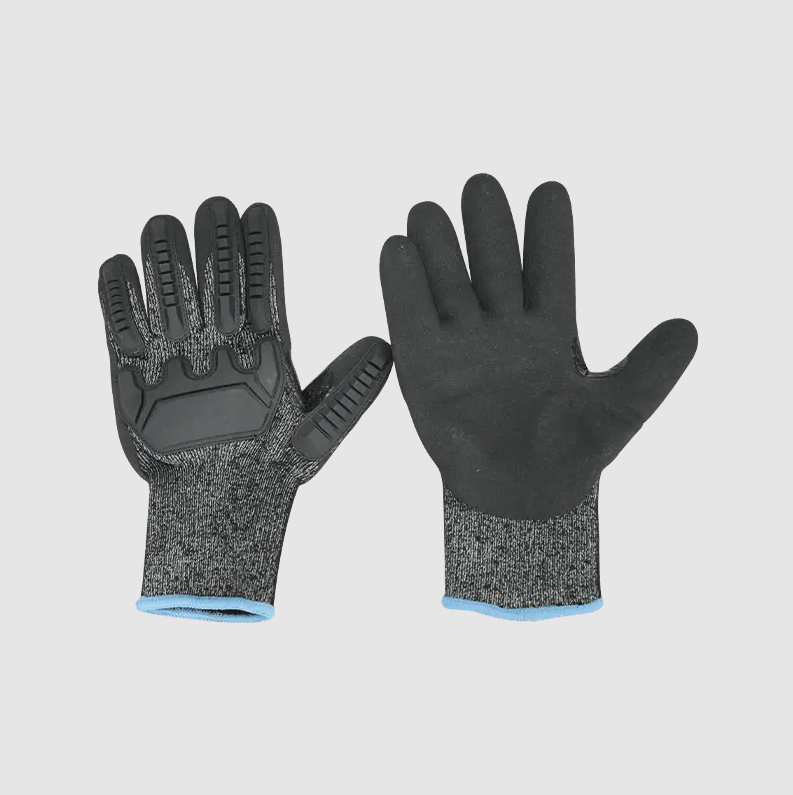
B. Chemical/Liquid Protective Gloves
These gloves are mainly used in environments involving contact with chemicals, oils, solvents, or biohazards.
Oil-resistant gloves: Mostly made of nitrile rubber (Nitrile) or polyvinyl chloride (PVC). Suitable for environments such as machinery maintenance, petrochemicals, and kitchen operations, specifically designed to resist corrosion from greases and some solvents.
Chemical-resistant gloves: Materials include butyl rubber, natural latex, or neoprene. They are crucial in laboratories and hazardous chemical handling, providing a chemical barrier against strong acids, strong alkalis, and organic solvents.
Waterproof gloves: Usually made of latex or PVC. Primarily used in cleaning, fishing, and other humid environments.
C. Special Environment Protective Gloves
These work gloves are specialized protective equipment designed for extreme temperatures or specific industrial requirements.
High-temperature resistant gloves: Made of materials such as aramid, fiberglass, and thermal insulation cotton. Primarily used for work near heat sources, such as welding, casting, and baking, to protect hands from heat damage.
Cold-weather gloves: Made with thermal insulation materials such as fleece and thermolite. Suitable for cold storage operations or outdoor low-temperature working environments, providing warmth.
Antistatic gloves: Contain conductive materials such as carbon fiber or copper/nickel fiber. Used in electronic component manufacturing and precision instrument assembly to prevent static electricity from damaging products.
2. How to choose the right "work gloves"?
Choosing the right work gloves is crucial for ensuring safety and improving efficiency. The following steps should be followed:
Identify the type of hazard: First, clearly define the specific hazards present in the work environment, such as cuts, chemical corrosion, high temperatures, or oil contamination. This is the basis for selecting the type of work gloves.
Refer to protection standards: Check whether the gloves meet relevant industry or international protection standards (such as EN388 for machine protection or EN374 for chemical protection) to ensure that the protective effect is certified.
Balancing Comfort and Flexibility: Ensure the selected work gloves fit properly without hindering operational flexibility and precision. For example, precision assembly often requires thin, coated nitrile work gloves.
Real-world Testing and Validation: Trial them in actual work environments to verify their protective performance, grip strength, and durability to ensure their true suitability.
Correctly selecting and using work gloves is the first step in protecting workers' health and safety. Each type of work glove has its specific protection range; no single glove can handle all hazards.
From basic canvas work gloves to high-tech cut-resistant gloves and specialized chemical-resistant gloves, work gloves come in a wide variety of types, designed to provide nuanced protection for a range of complex working conditions. Only by fully understanding the materials and characteristics of different work gloves can you truly "prescribe the right medicine" and provide the most reliable hand safety barrier for every worker.
 +86-0513-68163373
Product Category
Related Products
If you are interested in our products, please consult us
Contact Details
- Address: No.99 West Dingxin Road, Dingyan Town, Rugao, Jiangsu, 226500, China
- Fax: +86-0513-88568360
- Tel: +86-0513-68163373
- Email: [email protected]
[email protected]
Products
Quick Link
News Center
Mobile terminal
