


 English
 Français
What are the two types of welding gloves?
In industrial manufacturing and metal processing, safety is always the top priority. As the "second skin" of welders, the choice of welding gloves directly affects the safety and work efficiency of the workers.
Content
I. Argon Arc Welding Gloves (Thin Protective Type)
Argon arc welding (TIG welding) is known for its precision and aesthetics, with a relatively small heat-affected zone, but it demands extremely high hand dexterity from the operator. Therefore, the first major type of welding glove is a precision glove specifically designed for TIG welding.
Material Characteristics: Typically made of high-quality sheepskin, pigskin, or thin cowhide. Sheepskin is the most common material due to its softness and delicate feel.
Functional Advantages: This type of welding glove has a moderate thickness, allowing the welder to clearly feel the wire feed rhythm and the subtle vibrations of the welding torch, greatly improving welding accuracy.
Applicable Scenarios: Primarily used for welding precision instruments, stainless steel processing, and in situations where the weld appearance has extremely high requirements.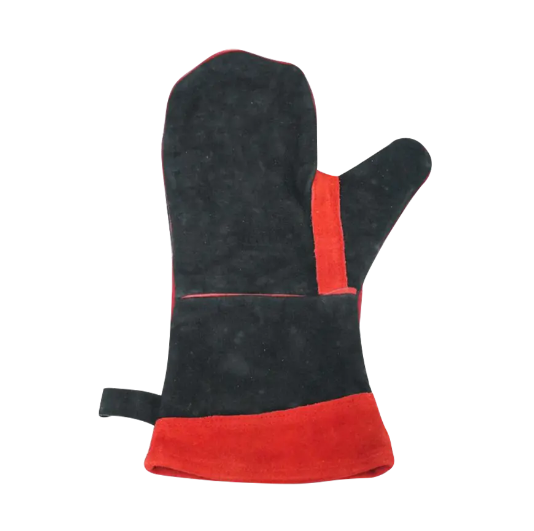
II. Welding Gloves (Thick, Heat-Insulating Type)
In contrast, manual arc welding (SMAW) or MIG/MAG welding produces a large amount of sparks and intense heat radiation. This has led to the development of a second major type of welding glove: thick, traditional welding gloves.
Material Characteristics: Mostly made of cowhide or rough pigskin. These welding gloves often have long cuffs designed to protect the welder's wrists and forearms from spatter.
Functional Advantages: Their core advantages lie in high-temperature resistance and spatter protection. They typically have an inner lining (such as cotton or fleece), which not only enhances heat insulation but also absorbs hand sweat, improving wearing comfort.
Applicable Scenarios: Widely used in shipbuilding, steel structure installation, heavy machinery manufacturing, and other high-current, high-heat welding operations.
Three Core Indicators for Choosing Welding Gloves
Besides identifying the two main types mentioned above, when selecting high-quality welding gloves, pay attention to the following details:
- Abrasion Resistance: Check the tightness of the leather. High-quality welding gloves should resist minor scratches from metal burrs.
- Sewing Craftsmanship: Observe whether fire-resistant thread (such as aramid thread) is used for sewing. Ordinary cotton thread is easily broken at high temperatures, causing the gloves to come undone.
- Inner Lining Design: A good lining not only insulates against heat but also prevents direct skin contact with leather treatment agents, reducing the risk of allergies.
Welding gloves are mainly divided into Argon Arc Welding Gloves, which prioritize flexibility and tactile sensitivity, and Electric Welding Gloves, which prioritize high-temperature resistance and strong protection. Understanding your welding process and choosing appropriate protective equipment will ensure safety while creating more perfect welds. Regardless of the type of welding gloves chosen, if you find any damage to the leather surface, severe carbonization, or broken seams, please replace them immediately and do not risk working in the field.
 +86-0513-68163373
Product Category
Related Products
If you are interested in our products, please consult us
Contact Details
- Address: No.99 West Dingxin Road, Dingyan Town, Rugao, Jiangsu, 226500, China
- Fax: +86-0513-88568360
- Tel: +86-0513-68163373
- Email: [email protected]
[email protected]
Products
Quick Link
News Center
Mobile terminal
